Symptoms of Stomach Ulcer: Early Signs, Pain & Warnings
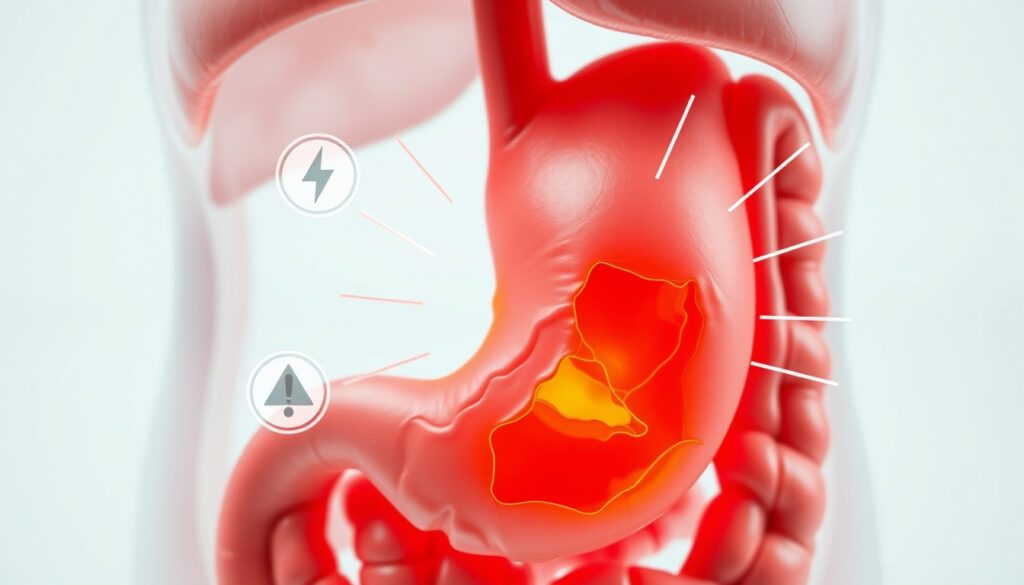
Stomach ulcers—open sores that develop on the stomach lining—produce distinctive warning signs that many people mistake for ordinary indigestion. Burning abdominal pain, bloating, and nausea rank among the most common early symptoms, according to the National Institute of Diabetes and Digestive and Kidney Diseases (NIDDK). Recognizing these signals matters because ulcers respond well to treatment when caught early, but can lead to serious complications including bleeding or perforation if ignored.
Most common symptom: burning or dull pain in abdomen · Other frequent signs: indigestion, heartburn, bloating · Severe indicators: vomiting blood, black stools · Healing potential: ulcers heal when causes treated · Top sources: NHS, Mayo Clinic, Cleveland Clinic
- Affects millions yearly
- H. pylori causes most cases
- 10–15% of H. pylori patients develop ulcers
What are the early warning signs of a stomach ulcer?
Common early symptoms
Abdominal pain is the most common symptom of a peptic ulcer, dull or burning, located in the upper abdomen between the belly button and breastbone (NIDDK). Typical signs and symptoms of stomach ulcers include burning stomach pain and indigestion, according to Cleveland Clinic. Many people experience indigestion with stomach ulcers, including burning pain and feeling full shortly after eating.
Pain characteristics
Ulcer pain feels like an acid burn or something eating away at the stomach (Cleveland Clinic). The sensation typically develops in the center of the upper abdomen, slightly to the left of the breastbone, and may radiate toward the neck, belly button, or back (NIDirect). Pain can last anywhere from minutes to hours and often starts hours after eating.
Accompanying signs like bloating
Additional symptoms include acid reflux, heartburn, nausea, vomiting, bloating, belching, and gas pain (Cleveland Clinic). Peptic ulcer symptoms may also include fullness, bloating, belching, heartburn, and nausea (Mayo Clinic). Less common symptoms include indigestion, heartburn, loss of appetite, sickness, weight loss, and burping or bloating after fatty foods (NIDirect).
What does ulcer pain feel like?
Location and type of pain
Stomach ulcer pain is located in the upper abdomen, between the breastbone and belly button, slightly to the left (Cleveland Clinic). Most common symptom of stomach ulcer is burning or gnawing pain in abdomen (NIDirect). The pain occurs in the upper-middle abdomen, similar to heartburn but may radiate to the back (Manhattan Gastroenterology).
Timing of pain episodes
Peptic ulcer pain may worsen between meals, at night, or after eating depending on the individual (Mayo Clinic). Burning stomach pain starts between meals or at night, briefly stops with food or antacids, and lasts minutes to hours (MedlinePlus). Pain may occur when stomach is empty or at night, temporarily relieved by eating; for others, it worsens after eating (NIDDK).
Pain relief factors
Ulcer pain is temporarily relieved by antacids or food in many cases (NHS Scotland). Pain can radiate to neck, belly button, or back, lasting minutes to hours and starting hours after eating, potentially waking a person at night (NIDirect). The pattern varies: gastric ulcer pain worsens shortly after eating (within 30 minutes), while duodenal ulcer pain is severe at night and lower near the navel (Medpark Hospital).
“Typical ulcer pain feels like an acid burn in your stomach, or like something is eating it.”
— Cleveland Clinic, Stomach Ulcer Overview
Do stomach ulcers heal on their own?
Factors influencing healing
Ulcers heal when the conditions causing them are removed (Cleveland Clinic). Many peptic ulcers have no symptoms until complications like bleeding or perforation occur (Mayo Clinic News Network). More than 70% of gastric ulcer patients have no noticeable symptoms, making early detection difficult without medical investigation (Medpark Hospital).
Role of treatment
About 10% to 15% of people with H. pylori develop ulcers (Mayo Clinic). When H. pylori is the cause, antibiotics are required to eradicate the bacteria and allow the ulcer to heal (Mayo Clinic). Without treatment targeting the underlying cause—whether H. pylori or NSAID use—the ulcer persists and may worsen.
Risks of untreated ulcers
Peptic ulcers can cause perforation (hole in stomach wall) leading to peritonitis or blockage causing fullness, vomiting, weight loss (Mayo Clinic). Complication symptoms include pallor, dizziness, weakness, black blood in stool, coffee-ground vomit, and sudden severe abdominal pain (Cleveland Clinic). Seek immediate care for black or tarry stool, bloody vomit, sudden severe pain, dizziness, or rapid pulse (NIDDK).
What can be mistaken for a stomach ulcer?
Similar conditions
Heartburn symptom could relate to peptic ulcer disease, making differentiation challenging (Mayo Clinic News Network). Stomach ulcer pain is in the upper-middle abdomen below the breastbone, similar to heartburn but may radiate to back with onset hours after meals (Manhattan Gastroenterology). Gallstones, pancreatitis, and gastritis share overlapping symptoms.
Key differences
Burning stomach pain is one of the first signs of stomach ulcer, worsening at night or when skipping meals (Manhattan Gastroenterology). Heartburn typically causes a burning sensation higher in the chest and is often triggered by specific foods or lying down. Gallstone pain tends to be sharper and more episodic, usually in the right upper abdomen.
Diagnostic overlaps
Fullness, bloating, belching, heartburn, and nausea appear in both ulcer disease and functional dyspepsia (Mayo Clinic Health System). H. pylori infection causes ache or burning stomach pain, worse when empty, upset stomach, loss of appetite, burping, bloating, and weight loss—symptoms that also overlap with gastritis (Mayo Clinic).
“Abdominal pain is the most common symptom of a peptic ulcer.”
— NIDDK, Peptic Ulcers Symptoms and Causes
How do I confirm I have a stomach ulcer?
Diagnostic tests
Endoscopy allows doctors to visualize the stomach and duodenum lining directly and take tissue samples for biopsy (NIDDK). H. pylori testing through breath, blood, or stool tests identifies the bacterial cause in most ulcer cases (Mayo Clinic). Blood or stool tests can also detect signs of bleeding from an ulcer.
Medical evaluation steps
A doctor will review symptoms, medical history, and medication use before ordering diagnostic tests (Cleveland Clinic). The evaluation typically includes discussing pain patterns, timing relative to meals, and any use of NSAIDs like ibuprofen or aspirin. Physical examination checks for tenderness in the upper abdomen.
When to seek help
Vomiting, especially with blood or coffee-ground appearance, is a common sign requiring immediate medical help (Manhattan Gastroenterology). Bleeding ulcers cause vomiting blood (red or black), dark or tarry stools, dizziness, or fainting (Mayo Clinic). Perforated ulcer symptoms include abdominal pain radiating to shoulders and swelling (UHD NHS).
Related reading: signs iron pills are working
my.clevelandclinic.org, mayoclinic.org, manhattangastroenterology.com, medparkhospital.com, mayoclinichealthsystem.org, niddk.nih.gov, medlineplus.gov, uhd.nhs.uk, newsnetwork.mayoclinic.org
Recognizing early burning pain from a stomach ulcer is vital, yet pursuing the fastest way to cure stomach ulcer typically promotes healing within 4-8 weeks.
Frequently Asked Questions
What causes a stomach ulcer?
The two most common causes are H. pylori bacterial infection and regular use of NSAIDs such as ibuprofen or aspirin. H. pylori damages the protective lining of the stomach, while NSAIDs reduce prostaglandins that shield the stomach wall. Less common causes include-Zollinger-Ellison syndrome, other infections, and chronic inflammation.
Are stomach ulcers dangerous?
Most ulcers heal completely with proper treatment. However, if left untreated, they can lead to serious complications including internal bleeding, perforation (a hole through the stomach wall), and peritonitis. An estimated 10% to 15% of people with H. pylori develop ulcers, and silent ulcers may not show symptoms until complications arise.
Can stomach ulcers kill you?
While stomach ulcers themselves are rarely fatal, complications from untreated ulcers can be life-threatening. Perforation leads to peritonitis, a severe abdominal infection, and bleeding can cause significant blood loss. Seeking prompt medical attention when warning signs appear prevents these outcomes.
What is a stomach ulcer?
A stomach ulcer, also called a gastric ulcer, is an open sore that develops on the inner lining of the stomach. Peptic ulcers include both gastric ulcers and duodenal ulcers (which form in the upper small intestine). They develop when digestive acids damage the stomach’s protective mucus layer.
What are stomach ulcer symptoms in females?
Symptoms in females are generally the same as in males: burning abdominal pain, bloating, nausea, heartburn, and fullness after eating. Some studies suggest women may be more likely to experience nausea and bloating as primary symptoms. More than 70% of gastric ulcer patients have no noticeable symptoms at all.
How to cure a stomach ulcer permanently?
Treatment targets the underlying cause. For H. pylori ulcers, a combination of antibiotics and acid-reducing medications (typically PPI proton pump inhibitors) eradicates the bacteria and allows healing. For NSAID-induced ulcers, discontinuing NSAIDs and using acid suppressants promotes healing. With successful treatment, ulcers typically heal within 8–12 weeks.
More related posts
 Toys R Us in 2025: Where It Still Exists and What Happened
 Eric Winter: Biography, Wife, Kids, and His Role on The Rookie
 Whose Telephone Number Is This – UK Free Lookup Guide
 Gerran Howell: From Young Dracula to The Pitt – A Welsh Actor’s Evolution
 MicroStrategy Share Price: Analysis, News, and Predictions 2025
 Single Bed Size in CM: Ireland Standards & Dimensions
 Giant African Land Snail: Risks, Pet Care, and Invasive Impact
 Don King: Biography, Net Worth, and Tyson & Ali Fallout