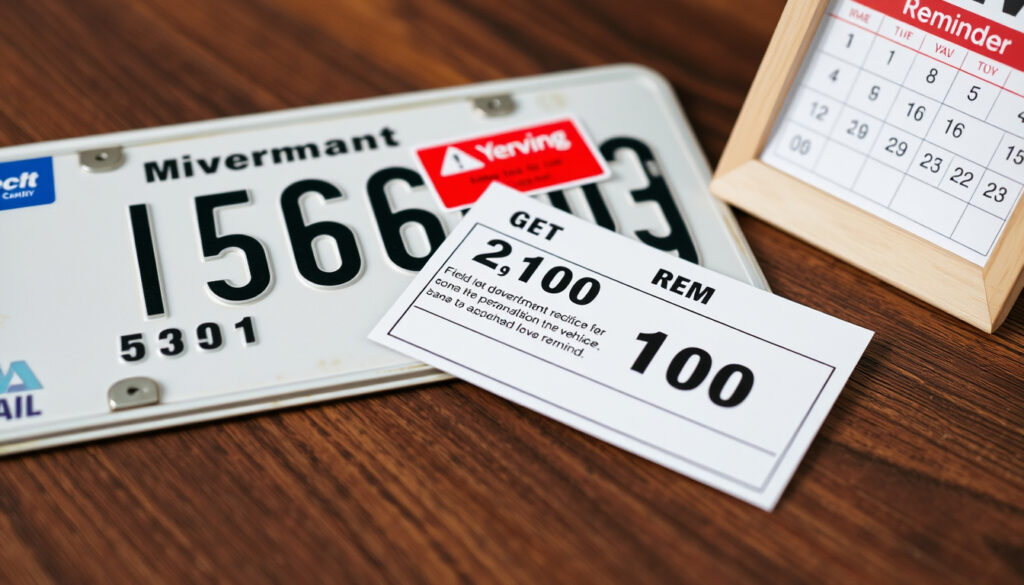
DVLA Personalized Plate Warning: £1,000 Fine & 10-Year Rule
If you bought a personalised number plate years ago and haven’t thought about it since, you could be about to lose it for good. The DVLA’s fresh warning affects up to 45 million drivers, with fines of £1,000 for non-compliant plates and a strict 10-year renewal rule that many owners don’t know about.
Drivers warned: 45 million ·
Maximum fine: £1,000 ·
Renewal period: 10 years ·
Plate theft increase: more than doubled in 4 years ·
Warning issued: July 2025
Quick snapshot
- Maximum fine for illegal plates is £1,000 (GB News (lifestyle news))
- Renewal period for unassigned personalised plates is 10 years (GB News (lifestyle news))
- Number plate thefts have more than doubled in four years (GB News (lifestyle news))
- Exact number of drivers who will lose plates due to non‑renewal
- Whether DVLA will offer grace periods
- July 24, 2025: The Sun publishes warning about little‑known number plate rule affecting 45 million drivers (The Sun (UK tabloid))
- Renew your retention certificate before expiry to avoid permanent loss (GB News (lifestyle news))
The following table summarises the key points from the DVLA warning.
| Label | Value |
|---|---|
| Fine for illegal plate | Up to £1,000 |
| Drivers warned | 45 million |
| Renewal period | 10 years |
| Plate theft increase | More than doubled in 4 years |
| Warning date | July 2025 |
| Certificate required | V778 retention document |
What is the DVLA warning about personalised number plates?
Details of the July 2025 warning
In July 2025, The Sun (UK tabloid) broke the story: a little‑known DVLA rule could hit 45 million drivers with a £1,000 fine or permanent loss of their cherished registration. The warning centres on two overlapping issues: the legality of the plate itself and the 10‑year retention requirement for personalised numbers not assigned to a vehicle.
Number of drivers at risk
According to GB News (lifestyle news), the DVLA estimates that every driver with a personalised plate that was issued a certificate of entitlement (V750) or retention document (V778) ten years ago must take action. The first batch of such certificates expired on March 9, 2025, as reported by Plates4Less (specialist plate seller).
Key points from the DVLA announcement
- Renewal is free for all personalised registration documents (GB News).
- No action needed if the plate is currently assigned to a vehicle (GB News).
- Owners must update their contact details on certificates to receive reminders (Plates4Less).
The implication is clear: millions of drivers need to verify their certificate status without delay.
How much is the fine for illegal number plates?
Maximum penalty for non‑compliant plates
The DVLA can impose fines of up to £1,000 for number plates that breach the law, as confirmed by GB News. This includes plates with obscured characters, illegal spacing, misrepresentation of letters or numbers, or non‑compliant fonts.
What constitutes an illegal number plate
Carreg.co.uk (car registration specialists) reported that the DVLA has issued a stern warning about misrepresentation – for example, using tape or screws to alter the appearance of a character. Illegal tinting can also lead to a £100 fine, as noted by GB News.
Enforcement and penalties
- £1,000 maximum fine for illegal plate (GB News).
- £100 fine for illegally tinted plates (GB News).
- MOT failure for obscured plates (GB News).
A £1,000 fine may seem steep, but the real penalty for ignoring the 10‑year rule is the permanent loss of a registration that could be worth thousands.
The pattern is that fines target physical plate violations, but the retention rule carries an even higher concealed risk.
Why must personalised number plates be renewed every 10 years?
The 10‑year certificate of retention
Personalised registration numbers that are not fixed to a vehicle are held on a retention certificate – either a V750 (never assigned) or a V778 (previously assigned). The DVLA now requires these certificates to be renewed every 10 years, a policy that took effect for certificates issued from 2015 onward. According to Wheels Alive (motoring news), the first wave of 10‑year certificates started expiring on March 9, 2025.
What happens if you don’t renew
Failure to renew results in permanent loss of the right to use that number, regardless of its market value. Plates4Less (specialist plate seller) warns that there is no reinstatement – even for a plate that has cost tens of thousands of pounds.
How to check your retention expiry
- Look at the expiry date on your V750 or V778 document.
- Set up a DVLA personalised registration account online (Wheels Alive).
- Contact DVLA if you have moved and not received a renewal reminder.
What this means is that a simple administrative step can safeguard an asset that may appreciate over time.
What are tamper-resistant screws and why are they required?
Purpose of tamper-resistant screws
Number plate thefts have more than doubled in four years, according to GB News. Tamper-resistant screws – often one‑way or security Torx fasteners – make it far harder for thieves to remove plates. The police and DVLA now recommend them as a cheap, effective deterrent.
How to install them
- Purchase a set of tamper‑resistant screws (available at most auto stores or online).
- Replace standard screws on the front and rear plates.
- Use the supplied driver bit – once tightened, the screw head cannot be easily undone without the matching bit.
Impact on number plate theft
While not mandatory, tamper‑resistant screws significantly reduce the risk of theft. The Daily Echo (local UK news) reported that drivers should fit these screws to comply with best practice. Combined with renewing your retention certificate, it’s a simple way to protect your investment.
Plate theft is not just an inconvenience – criminals use stolen plates on vehicles to avoid detection. Fitting tamper‑resistant screws costs a few pounds but can save you the £1,000 fine and the hassle of reporting a stolen identity.
The catch: even with screws, the 10‑year renewal rule remains the dominant threat to plate ownership.
How to avoid losing your personalised number plate?
Steps to renew your retention
- Check the expiry date on your V750 or V778 certificate. Renewal can be applied for from 28 days before expiry, per Wheels Alive.
- Renew online for V750 certificates via your DVLA personalised registration account – renewal is free (GB News).
- Renew by post for V778 retention documents – the DVLA will issue a new certificate (Wheels Alive).
- Update your address on the certificate to ensure you receive renewal reminders (Plates4Less).
Transferring your plate to a vehicle
If you assign the number to a car, the 10‑year renewal clock stops – you only need to renew again if you later take the plate off and put it back on retention. The transfer can be done online via the DVLA service. For more on driving requirements, see our guide on Category B Driving Licence.
Securing your plate with tamper-resistant screws
As noted in the previous section, fitting tamper‑resistant screws is a quick, low‑cost way to protect your plate from theft.
Checking legal compliance
- Characters must be the correct size, spacing, and font. No misrepresentation (Carreg.co.uk).
- Plate must not be obscured or tinted.
- Use a registered number plate supplier to manufacture your plates.
The implication: taking action now is the only way to guarantee your personalised registration remains yours.
Timeline: Key dates in the DVLA personalised plate warning
- February 2023 – Carreg.co.uk reports DVLA warning on misrepresentation and £1,000 fine.
- September 18, 2025 – GB News issues urgent DVLA warning about 10‑year retention certificates expiring.
- July 24, 2025 – The Sun publishes warning about little‑known number plate rule affecting 45 million drivers.
Clarity: What we know and what remains unclear
Confirmed facts
- Maximum fine is £1,000 (GB News)
- Renewal period is 10 years (GB News)
- Number plate thefts have more than doubled in four years (GB News)
- DVLA issued a warning in July 2025 (The Sun)
- Renewal is free (GB News)
- Failure to renew leads to permanent loss (GB News)
What’s unclear
- Exact number of drivers who will lose their plates due to non‑renewal
- Whether grace periods will be offered by DVLA
What the experts say
A warning has been issued to 45 million drivers over a little-known number plate rule that could see you hit with a £1,000 fine.
— The Sun
The warning impacts drivers who were issued a certificate or retention document for their personalised registration number 10 years ago.
— GB News
DVLA has issued a stern warning to drivers to make sure their number plates are legal or they could risk a fine of up to £1000.
— Carreg.co.uk
You must renew your right to use your private (personalised) number every 10 years if it’s not being used on a vehicle. You’ll permanently lose it if you don’t.
— Daily Echo
What this means for UK drivers
The DVLA’s 10‑year retention rule has transformed a niche registration market into a ticking compliance risk. For the estimated 1.5 million holders of personalised plates on retention in the UK, the choice is clear: mark your calendar for the renewal date, assign the plate to a vehicle, or risk watching a valuable asset disappear. For the DVLA, the message is straightforward: renew, or lose it. Drivers should also ensure they hold the correct Category B Driving Licence and review their car insurance policy for theft coverage.
Drivers should be aware that the same rules apply to newly issued plates from DVLAs October 2025 plate release, which also carry the £1,000 fine for misuse.
Frequently asked questions
Can I transfer my personalised plate to a new car?
Yes, you can transfer it online via the DVLA service. Once assigned to a vehicle, the 10‑year renewal clock stops until you take it off again.
What is the cost to renew a retention certificate?
Renewal is free for all personalised registration documents, as confirmed by GB News.
How do I know if my number plate is legal?
Check that the characters are the correct size, spacing, and font, and that the plate is not obscured or tinted. Use a registered supplier.
What should I do if my plate is stolen?
Report the theft to the police and obtain a crime reference number. Then contact DVLA to arrange replacement plates.
Can I sell my personalised number plate?
Yes, you can sell or transfer your plate. The buyer will need to apply for a retention certificate. Ensure the certificate is in date.
How long does it take to transfer a plate?
Online transfers are usually processed immediately. Postal applications can take several weeks.
Are there any exemptions to the 10-year rule?
No exemptions currently exist. The rule applies to all personalised registration certificates not assigned to a vehicle.
What is the difference between a personalised plate and a standard plate?
A personalised plate is a registration number chosen by the owner, while a standard plate is issued sequentially by DVLA. Personalised plates have the same legal requirements but are subject to the 10‑year retention rule.
More related posts
 Boeing 787-9: Is It Safe, Comfortable, and a Good Plane
 Stay Updated Always TXEPC: Guide for Busy Professionals
 Au Vodka: Who Owns It, Is It Welsh, and Why It’s So Popular
 Skoda Yeti for Sale: Is It Worth Buying? Problems & Guide
 Etihad Airways vs Emirates: Economy Class Comparison 2025
 Bayern vs Hamburger SV – DFB Pokal Preview Prediction H2H
 Christ Redeemer Statue: Guide, History & Key Facts
 Symptoms of Brain Tumor: Early Signs, Red Flags & When to Worry