What Is a Tariff – Definition, Types and Economic Impacts
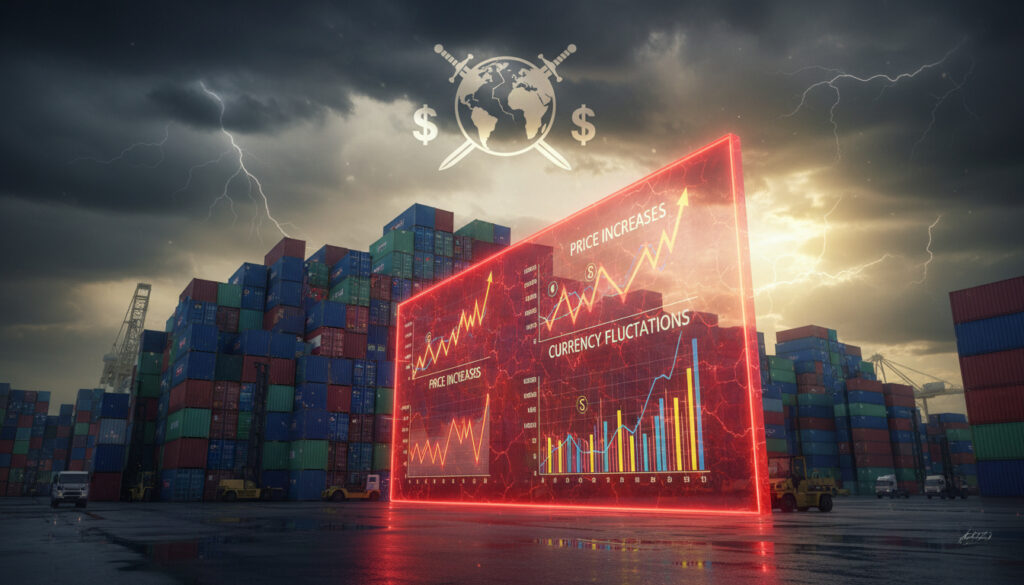
A tariff functions as a tax imposed by a government on imported goods or services, paid by the importing business to domestic customs authorities. While collected at ports of entry, these charges typically transmit through supply chains, materializing as higher prices for end consumers within six to eight months.
Governments implement tariffs to generate revenue, insulate domestic industries from foreign competition, address trade imbalances, or secure leverage in negotiations concerning issues like drug trafficking or immigration enforcement. The tool represents one of the oldest forms of trade regulation, predating modern economic theory.
Contemporary application involves complex calculation methods—primarily percentage-based ad valorem rates or fixed per-unit specific fees—that determine the exact financial burden. According to the Council on Foreign Relations, understanding these mechanics clarifies the distinction between statutory liability and economic incidence.
What Is a Tariff?
Tax on imported goods or services collected at entry
Protect domestic industry and generate government revenue
Ad valorem (percentage) and specific (fixed fee)
Consumer price increases within 6-8 months
- Tariffs are legally paid by importing businesses, not exporting countries.
- Consumers bear ultimate costs through retail price inflation.
- Low-income households suffer disproportionate impacts relative to total spending.
- U.S. Customs and Border Protection collects duties at designated ports.
- Two primary structures exist: percentage-based and fixed-fee calculations.
- Retaliatory tariffs from trading partners frequently offset domestic protections.
- Revenue generation serves secondary to trade protection in modern policy.
| Attribute | Details |
|---|---|
| Legal Payer | Importing business entity |
| Collection Agency | U.S. Customs and Border Protection |
| Primary Types | Ad valorem, Specific |
| Price Pass-through | Typically 6-8 months to retail |
| Consumer Impact | Higher prices, regressive effects |
| Revenue Destination | General government treasury |
| WTO Bound Rates | Variable by member nation |
| 2025 U.S. Baseline | 10% on all imports |
What Are the Different Types of Tariffs?
Ad Valorem Tariffs
Ad valorem tariffs levy a percentage of the imported good’s declared value. For example, a 10% duty on a $400 television generates a $40 tax obligation. This structure scales with commodity prices, making it the predominant form for manufactured goods. The Council on Foreign Relations notes this type adjusts automatically with inflation.
Specific Tariffs
Specific tariffs impose fixed monetary charges per physical unit—such as $5 per barrel of oil—regardless of market value. Oxford Economics explains these provide predictable revenue but fail to adjust for price fluctuations, limiting their prevalence in modern agreements.
For a Chinese-imported television with an export price of $400 and a 10% ad valorem tariff, the importer remits $40 to customs authorities. This cost typically embeds into retail pricing within six to eight months, according to University of Colorado research.
How Do Tariffs Work?
Collection Mechanics
Importers pay tariffs upon goods entering the country, with agencies assessing duties before merchandise releases into domestic markets. Charles Schwab analysts confirm that this statutory obligation falls entirely on the importing entity.
Cost Incidence and Price Transmission
Economists agree that while importers remit payments, consumers bear the economic burden through elevated retail prices. Harvard Kennedy School research identifies three transmission mechanisms: direct price pass-through, margin absorption by firms, or reduced export prices from foreign suppliers.
What Are the Economic Impacts of Tariffs?
Consumer Welfare Effects
Tariffs function as regressive taxes, consuming larger portions of low-income household budgets than affluent ones. Analysis from the University of Colorado confirms this disproportionate impact. Domestic producers may raise prices on non-tariffed goods, capitalizing on reduced competitive pressure.
Research demonstrates that U.S. consumers bore the brunt of recent China tariffs through higher prices, particularly in low-margin retail sectors. The Council on Foreign Relations reports these costs manifest as generalized inflationary pressure.
Domestic Industry Protection
Protected sectors gain temporary competitive breathing room as imported alternatives become costlier. However, Oxford Economics suggests domestic firms often fail to expand capacity sufficiently to offset consumer costs.
Governments gain negotiation leverage on issues like drug trafficking through tariff threats, yet risk supply chain fragmentation. Market analysts observe that unilateral implementation bypasses World Trade Organization dispute mechanisms. You can find more information about tariffs and their impact on international trade at $cómo saber si estoy en Asnef.
International Retaliation
Export-dependent economies face severe market share losses. Canada, where U.S. exports constitute 20% of GDP, and China, the world’s top exporter since 2009, both experienced measurable impacts from recent U.S. measures.
How Have Tariffs Shaped Economic History?
- Smoot-Hawley Tariff Act: The United States enacted sharply higher rates, triggering global retaliation that exacerbated the Great Depression.
- General Agreement on Tariffs and Trade: Established multilateral frameworks to reduce barriers through negotiation rounds.
- World Trade Organization: Replaced GATT with binding dispute resolution and “bound rates” limiting maximum tariffs by member.
- U.S.-China Trade Measures: Bilateral tariff escalation began, bypassing WTO channels.
- U.S. Baseline Implementation: 10% tariff applied to all imports.
- U.S.-China Escalation: Rates on Chinese goods reached 145%.
- Partial De-escalation: China tariffs reduced to 30% following negotiations, with electronics exemptions.
- Regional Security Tariffs: Increased rates on Mexico and Canada citing national security concerns.
What Do We Know for Certain vs. What Remains Unclear?
| Established Information | Information That Remains Unclear |
|---|---|
| Tariffs are taxes legally paid by importing businesses, not foreign governments. | The precise duration and magnitude of 2026 tariff rates remain undefined. |
| Consumers bear ultimate costs through higher retail prices within 6-8 months. | Whether tariffs effectively reduce long-term trade deficits remains disputed. |
| Two primary types exist: ad valorem and specific. | The exact scope of retaliatory measures is unpredictable. |
| WTO members maintain bound rates limiting maximum applicable tariffs. | The degree to which domestic industries will expand to offset imports is uncertain. |
| Low-income households face disproportionate spending impacts. | Final consumer price pass-through percentages vary by sector. |
| Unilateral tariffs during 2018-2025 bypassed WTO mechanisms. | The long-term diplomatic consequences require further observation. |
What Drives Governments to Impose Tariffs?
Governments deploy tariffs as multifaceted instruments extending beyond pure economics. Revenue generation, while historically primary, now serves secondary to protectionist aims. Modern applications target specific industrial policy goals, including nurturing nascent sectors or preserving agricultural viability against subsidized foreign competition.
Diplomatic leverage constitutes another critical function. The threat of tariffs provides bargaining power in negotiations concerning border security or enforcement against illicit drug trafficking. What Is a Rainbow Baby – Meaning, Origin and Support represents domestic policy concerns that occasionally intersect with broader legislative packages containing trade measures.
Unlike standard taxation, tariffs discriminate by origin, creating complex incentive structures. Domestic producers may opportunistically raise prices on goods unaffected by tariffs, exploiting reduced competitive pressure.
What Do Leading Authorities Say About Tariff Effects?
“Research shows U.S. consumers have borne the brunt of China tariffs via higher prices.”
— Council on Foreign Relations
“Tariffs disrupt supply chains, slow economic growth, and invite retaliation.”
— Oxford Economics
What Are the Essential Points to Remember?
Tariffs represent government taxes on imports, legally remitted by importing businesses but economically absorbed by consumers through elevated retail prices. While offering short-term protection for domestic industries and generating public revenue, they simultaneously impose regressive costs on low-income households, disrupt global supply chains, and frequently trigger retaliatory measures. Compare the Market Insurance – Reviews, Rewards and Savings illustrates how comparative analysis tools help consumers navigate price fluctuations in affected markets.
Frequently Asked Questions
What distinguishes a tariff from a standard tax?
Tariffs apply exclusively to imported goods, discriminating by country of origin, whereas standard taxes apply uniformly to domestic and foreign products alike.
Do exporting countries pay tariffs directly?
No. The importing business pays customs authorities directly. While foreign exporters may reduce prices, the statutory liability rests with the domestic importer.
How quickly do tariffs affect retail prices?
Empirical evidence suggests pass-through occurs within six to eight months as existing inventory depletes and new stock reflects higher import costs.
Are tariffs effective at reducing trade deficits?
Economic theory suggests limited effectiveness. Reduced import volumes may be offset by currency appreciation or retaliatory barriers against exports.
What is the difference between a tariff and a quota?
Tariffs tax imports while permitting unlimited quantities. Quotas restrict physical volumes regardless of price.
Can domestic companies benefit without producing more?
Yes. Domestic firms often raise prices on non-tariffed goods when import competition decreases, extracting higher margins without increasing output.
Do all countries follow WTO tariff rules?
WTO members bind maximum rates, but recent unilateral actions have bypassed dispute mechanisms, undermining the system’s credibility.
More related posts
 Peter Rabbit Characters: Names of All Rabbits Explained
 What Does COSHH Stand For? A Complete Guide to COSHH Regulations
 Chris Farley Death: Cause, Reactions, and Unanswered Questions
 Stanley 40 oz Tumbler: Price, Size, Disney Ban & What to Know
 Trisha Krishnan: Biography, Age, Relationships, and FAQs
 Steven Spielberg: Disability, Feuds, and Most Successful Film
 Dragons’ Den Cast: Judges, Net Worth, Deaths & Personal Lives
 Saucony Endorphin Pro 3 – Specs Performance Buying Guide