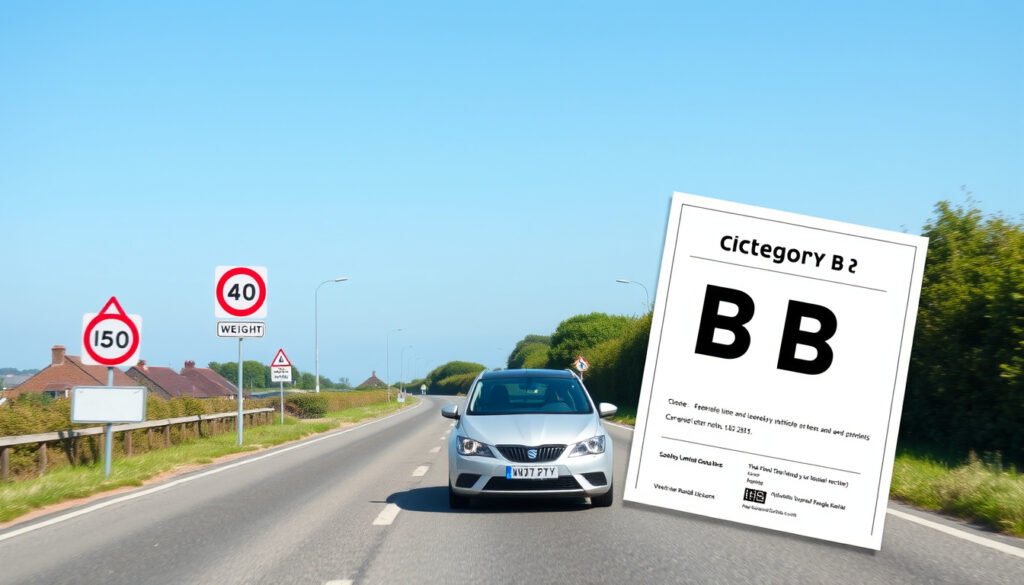
Category B Driving Licence – Vehicles, Limits and How to Get It
The Category B driving licence represents the standard qualification for operating cars and light vehicles across the United Kingdom. Understanding its entitlements, limitations, and application process proves essential for anyone seeking to drive legally on British roads. This guide examines what Category B covers, which vehicles fall within its scope, and the steps required to obtain this widely-held licence.
For many UK residents, Category B serves as their primary driving qualification, permitting operation of everyday vehicles from family saloons to small vans. The category accommodates various vehicle types and configurations, though specific entitlements vary depending on when the driving test was passed. Those who obtained their licence before 1997 enjoy notably broader towing capabilities compared to more recent licence holders.
Regulatory responsibility for driving licence categories in Great Britain rests with the Driver and Vehicle Licensing Agency, commonly known as the DVLA, while the Driver and Vehicle Standards Agency handles testing procedures. Understanding the distinction between these bodies helps clarify where to direct specific enquiries regarding entitlements and testing.
What is a Category B Driving Licence?
Category B constitutes the standard car driving licence in the United Kingdom, granting holders permission to operate motor vehicles up to a maximum authorised mass of 3,500 kilograms with seating for up to eight passengers. This classification covers the majority of vehicles used for personal transportation, from compact city cars to larger family vehicles and light commercial vans.
Vehicle Weight and Passenger Limits
The maximum authorised mass refers to the gross vehicle weight including fuel, passengers, and cargo. Under standard Category B provisions, vehicles must not exceed 3,500kg MAM. Passenger capacity is strictly limited to eight seats, which includes the driver’s position.
One significant exception applies to zero-emission vehicles. Electric and hydrogen-powered cars receive an extended weight allowance of 4,250kg MAM. This increase extends further to 5,000kg if the vehicle has been specifically adapted to accommodate disabled passengers, recognising the additional weight of mobility equipment.
Maximum authorised mass differs from kerb weight. MAM represents the fully laden weight limit set by the manufacturer, not the empty vehicle weight.
- Standard Category B covers vehicles up to 3,500kg MAM with up to 8 passenger seats
- Electric and hydrogen vehicles receive extended 4,250kg limit
- Disabled-adapted zero-emission vehicles may reach 5,000kg MAM
- Trailer towing entitlements vary according to test pass date
- Automatic-only restrictions apply to those who tested in automatic vehicles
| Entitlement Aspect | Standard Limit | Notes |
|---|---|---|
| Maximum Authorised Mass | 3,500kg | Standard vehicles |
| Zero-Emission Vehicle Mass | 4,250kg | Electric or hydrogen only |
| Adapted Zero-Emission Mass | 5,000kg | Disabled access vehicles |
| Maximum Passenger Seats | 8 | Including driver |
| Trailer Weight (Post-1996) | 750kg | Or combined max 3,500kg |
| Trailer Weight (Pre-1997) | 8,250kg | Combined vehicle and trailer |
| Minimum Age | 17 years | Standard cars |
What Vehicles Can You Drive on a Category B Licence?
The range of vehicles permitted under Category B extends beyond standard passenger cars. Understanding precisely which vehicles fall within entitlement boundaries helps avoid inadvertently driving without appropriate coverage, which carries significant legal and insurance implications.
Cars
Standard saloon, hatchback, estate, coupe, and convertible vehicles virtually always fall within Category B parameters. These typically weigh between 1,200kg and 1,800kg unladen, comfortably meeting the 3,500kg MAM requirement regardless of passenger load. Larger SUVs and people-movers also generally qualify, though checking the vehicle’s gross weight specification remains advisable when purchasing or hiring larger models.
Motorhomes
Motorhome classification depends primarily on weight rather than vehicle type. Smaller coach-built and van-conversion motorhomes frequently stay within the 3,500kg limit, rendering them permissible under standard Category B. Larger motorhomes exceeding this threshold require alternative entitlements or category upgrades, potentially necessitating C1 classification for vehicles between 3,500kg and 7,500kg.
Motorhome weights vary significantly between models. A vehicle’s Maximum Authorised Mass appears on the registration document and vehicle identification plate. Always verify this figure against your licence entitlements.
Towing Trailers
Trailer entitlements diverge considerably based on when the driving test was completed. Those who passed before 1 January 1997 can operate vehicle and trailer combinations up to 8,250kg MAM, along with minibuses towing trailers exceeding 750kg. This grandfather entitlement reflects the testing standards in place during that period.
Holders who passed on or after 1 January 1997 face more restrictive towing rules. The standard entitlement permits trailers up to 750kg MAM, or heavier trailers provided the combined weight of vehicle and trailer does not exceed 3,500kg. However, a significant regulatory change occurred on 16 December 2021, when all existing Category B holders automatically received BE entitlement, commonly referred to as the car and trailer entitlement, without requiring additional testing.
This automatic BE upgrade allows licence holders to tow trailers up to 3,500kg MAM, substantially expanding towing capabilities for those previously restricted to lighter loads. The change brought UK regulations closer to European standards, though post-Brexit legislation retains this provision.
How Do I Get a Category B Driving Licence?
Obtaining a Category B licence involves a structured process combining provisional eligibility, theory testing, practical assessment, and formal licence application. Each stage carries specific requirements that must be satisfied before progressing to the next.
Theory Test
The theory test comprises two components administered together: a multiple-choice examination and a hazard perception assessment. Candidates must pass both elements to proceed to the practical test. The multiple-choice section covers road rules, traffic signs, vehicle safety, and general driving knowledge, while hazard perception evaluates ability to identify developing hazards in video clips.
Booking the theory test requires a valid provisional licence. Candidates must achieve a minimum score of 43 out of 50 on the multiple-choice section and score at least 44 out of 75 on hazard perception. Results remain valid for two years, meaning practical test booking must occur within this window or the theory component requires re-sitting.
Practical Test
The practical driving test evaluates various competencies including vehicle handling, road awareness, communication with other road users, and independent driving exercises. The test lasts approximately 40 minutes and includes an eyesight check, safety questions regarding vehicle maintenance, approximately 20 minutes of independent driving, and various manoeuvres.
Test candidates must arrive with a qualified accompanying driver, appropriate insurance, and a vehicle meeting roadworthiness standards. Automatic and manual transmission tests exist as separate options, with automatic test passes resulting in licence restrictions discussed further below.
Licence Application
Following successful practical test completion, the examining examiner provides a pass certificate. Candidates must then apply formally to the DVLA for their full licence, typically processed within three weeks. Application can occur online, by post using form D1 available from Post Office branches, or through automatic processing when the test centre submits results electronically.
When applying, you’ll need to provide identity documentation, your provisional licence, and the pass certificate. Expired or damaged documents may cause delays requiring additional verification steps.
Category B vs Other Categories: Key Differences
Several driving licence categories exist alongside Category B, each authorising operation of different vehicle types. Understanding these distinctions helps drivers recognise when additional qualifications become necessary and why certain restrictions apply.
Category B vs Category B1
Category B1 covers specifically light four-wheeled vehicles with restricted weight parameters. Quadricycles and micro cars fall within this category, with weight limits of 400kg for unladen passenger vehicles or 550kg for those designed to carry goods. Most standard road cars exceed these thresholds, requiring Category B regardless of size impressions.
The minimum age for Category B1 matches Category B at 17 years, yet the practical value differs substantially. Category B automatically includes B1 entitlements, whereas B1 does not permit operation of standard cars. Consequently, learners almost universally pursue Category B directly rather than limiting themselves to the lighter category.
Automatic Transmission Restrictions
Candidates who pass their practical test in an automatic transmission vehicle receive a Category B licence restricted to automatic vehicles only. This restriction, often noted as “automatic only” on the licence, means driving manual transmission vehicles constitutes an offence, regardless of apparent similarity.
Removing this restriction requires re-sitting and passing the practical test in a manual vehicle. No exchange programme or additional theory component allows automatic holders to upgrade without demonstrating manual competence through full practical assessment.
Those uncertain whether they will need manual vehicle operation, whether for employment purposes or personal circumstances, should strongly consider learning in a manual vehicle from the outset. Many driving instructors recommend this approach despite automatic tuition sometimes appearing quicker or simpler. For those weighing up automatic versus manual transmission options, additional guidance on driving licence categories explained provides further context on how these choices affect long-term driving entitlements, and you can find more information about the Category B driving licence at 18ct gold price today UK.
For those weighing up automatic versus manual transmission options, additional guidance on driving licence categories explained provides further context on how these choices affect long-term driving entitlements.
Category B Licence Costs and Practical Tips
While official test fees remain relatively modest, comprehensive costs for obtaining a Category B licence extend well beyond government charges. Professional driving instruction typically represents the largest expense, with prices varying substantially by location, instructor experience, and lesson intensity.
Test Fees
The DVLA sets standard fees for official components. Theory test costs start at approximately £23, covering both examination elements. Practical driving test fees depend on whether testing occurs on weekdays, evenings, or weekends, with standard weekday tests currently priced around £62. Evening and weekend appointments carry premium charges.
Licence application fees apply upon successful test completion. First provisional licence applications cost approximately £34, with renewal fees after age 70 charged at no cost. The full licence photocard replacement, when required due to loss, damage, or change of details, carries a £17 charge.
Training Recommendations
Industry guidance suggests most learners require between 20 and 45 hours of professional instruction supplemented by private practice. Significant variation exists based on individual aptitude, prior experience such as prior driving in another country, and frequency of lessons.
Selecting an approved driving instructor registered with the DVSA provides assurance of professional standards. Intensive courses offering concentrated learning over short periods may suit some candidates, though traditional weekly lessons often allow better skill consolidation between sessions.
Comparing instructor costs reveals considerable geographic variation, with London and Southeast England typically commanding higher rates than other regions. However, the cheapest option does not necessarily represent best value when considering pass rates, pupil reviews, and teaching style compatibility.
The Path to Category B: Step by Step
The journey from provisional licence holder to qualified driver involves distinct phases, each building upon previous achievements. Understanding this progression helps candidates plan effectively and maintain momentum throughout the process.
- Apply for provisional licence: Eligibility begins at age 15 years and 9 months, with licences typically issued from age 17. Applications submit online through the DVLA website or via form D1 from the Post Office.
- Begin professional instruction: Lessons can commence upon provisional licence receipt. Most learners start with an assessment lesson to gauge current ability and instructor compatibility.
- Pass the theory test: Once adequate knowledge develops, candidates book and attempt the combined theory examination. Preparation through official practice materials improves success likelihood.
- Complete practical training: Intensive instruction continues building vehicle control, road awareness, and test-ready competence through varied driving conditions and routes.
- Pass the practical driving test: The culminating assessment evaluates all driving competencies. Candidates may attempt the test multiple times if initial attempts prove unsuccessful.
- Apply for full licence: Documentation submits to DVLA following successful practical completion. The photocard licence arrives by post within approximately three weeks.
Throughout this process, provisional licence holders must display L plates and cannot drive unsupervised on motorways until obtaining full qualification. Once passed, new drivers often consider additional training such as the Pass Plus scheme, which provides advanced instruction in areas like motorway driving and night conditions.
Category B: Established Facts and Remaining Uncertainties
Clear factual understanding regarding Category B entitlements helps drivers avoid confusion and potential legal complications. While many aspects of the category remain well-documented, certain areas continue generating questions or misunderstanding.
Established Information
- Maximum authorised mass of 3,500kg applies to standard Category B vehicles
- Minimum age of 17 years required for car driving
- Both theory and practical tests must be passed
- Automatic test passes result in automatic-only restriction
- December 2021 granted automatic BE entitlement to existing holders
- Electric vehicles receive 4,250kg weight allowance
Areas of Uncertainty
- Specific 2025 fee updates not confirmed in available sources
- Motorhome weight classifications for unusual configurations
- Future regulatory changes following post-Brexit reviews
- Potential harmonisation with new EU driving licence directives
Understanding Your Category B Licence in Context
The Category B licence forms part of a comprehensive categorisation system developed to ensure drivers possess appropriate competencies for different vehicle types. This structured approach reflects the substantial variation in vehicle handling, size, and operational requirements across the motoring spectrum.
Historically, UK driving categories evolved from earlier systems that grouped vehicles differently. The current framework aligns closely with European standards despite the United Kingdom’s departure from the European Union. Regulatory bodies have confirmed that existing entitlements remain unchanged following Brexit, providing continuity for licence holders.
For most personal transportation needs, Category B provides comprehensive coverage. Larger vehicles including medium-sized trucks and minibuses exceeding Category B parameters require additional entitlements such as C1 or D categories. Those considering commercial driving careers or vehicle modifications should consult DVLA guidance regarding necessary upgrades.
Official Guidance on Category B Entitlements
Official sources provide authoritative information regarding driving licence categories and entitlements. The following guidance reflects established regulatory positions as published by government agencies and recognised driving authorities.
“Category B: You can drive motor vehicles with a maximum authorised mass (MAM) of up to 3,500 kilograms and with no more than 8 passenger seats (excluding the driver’s seat).”
“If you passed your test before 1 January 1997 you can drive a vehicle and trailer combination up to 8,250kg MAM. If you passed on or after 1 January 1997 you can tow a trailer up to 750kg, or a heavier trailer if the combined weight of the vehicle and trailer does not exceed 3,500kg.”
The DVLA website serves as the primary resource for licence applications, entitlements verification, and official guidance. Drivers with specific circumstances or complex queries should direct enquiries through official channels to ensure accuracy regarding their individual entitlements.
Summary: What You Need to Know About Category B
The Category B driving licence opens doors to operating the majority of vehicles encountered on UK roads, from everyday cars to light commercial vehicles and appropriately-sized motorhomes. Key requirements include reaching age 17, passing both theory and practical assessments, and understanding the specific weight and passenger parameters that define the category’s scope.
Towing capabilities vary based on test pass date, with older licence holders enjoying broader trailer entitlements. The December 2021 regulatory update substantially improved towing options by automatically granting BE entitlement to all existing Category B holders. Automatic-only restrictions apply to those who tested in automatic vehicles, requiring practical re-assessment for manual authorisation.
For those comparing insurance providers once qualified, resources such as First Alternative Car Insurance – Pioneers, History and Savings and Compare the Market Insurance – Reviews, Rewards and Savings offer valuable comparison information. Beginning the journey toward Category B qualification involves applying for a provisional licence, undertaking professional instruction, and successfully completing both examination components before enjoying the independence that full driving entitlement provides.
Frequently Asked Questions
Can I drive abroad with my Category B licence?
UK driving licences remain valid for driving in EU and EEA countries for short visits under international agreements. An International Driving Permit may be required in some non-EU countries. Check requirements before travelling, as regulations vary by destination.
What happens if I fail the practical driving test?
Failed attempts require no waiting period before rebooking in most circumstances. Simply arrange another test date when ready. Theory test results remain valid for two years, so multiple practical attempts are possible within that window without re-sitting theory.
Can I tow a caravan with Category B?
Yes, subject to weight limits. Post-1996 licence holders can tow caravans up to 750kg or heavier ones if combined weight stays under 3,500kg. The December 2021 BE entitlement upgrade allows trailers up to 3,500kg MAM, substantially expanding towing options.
How long does a Category B licence last?
A full Category B licence remains valid until age 70, after which renewals occur every three years. There is no mandatory re-testing for car licences, though medical conditions may affect ongoing eligibility at any age.
Does Category B cover driving a minibus?
Standard Category B permits minibuses with up to 8 passenger seats, though this excludes larger minibuses designed for more passengers. Pre-1997 licence holders enjoy additional entitlements for minibus and trailer combinations.
Can I drive a van on my Category B licence?
Yes, provided the van’s Maximum Authorised Mass does not exceed 3,500kg. Most standard vans fall comfortably within this limit, including popular models such as Ford Transit, Mercedes Sprinter, and Vauxhall Movano variants when in standard configuration.
What is the difference between provisional and full Category B?
Provisional entitlement permits learning to drive under supervision with L plates displayed. Full Category B grants independent driving authority. Provisional holders cannot drive unsupervised, on motorways, or without a qualified accompanying driver meeting specific criteria.
More related posts
 Steph McGovern: Biography, Age, Career, and Personal Life
 Fishing Lakes Near Me – DNR Maps, Stocking Schedules & Tips
 John Deacon: Biography, Net Worth, Retirement & Life After Queen
 Pendine Sands Holiday Park: Wales Reviews, Prices & Guide
 Dara Ó Briain Biography: Education, Career, Family & More
 Catherine Tate: Biography, Net Worth, and Career
 George Kay: Life, Death, and Relationship with Kerry Katona