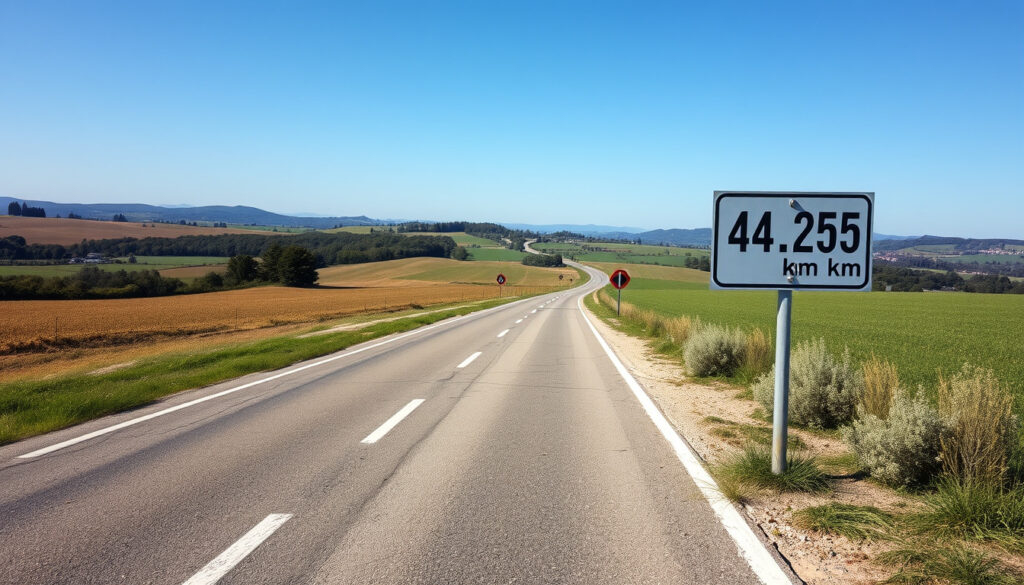
How Many Km in a Marathon? 42.195 km Exact Distance
If you’ve ever wondered exactly how long a marathon is, the answer is precise: 42.195 kilometers, or 26 miles and 385 yards. That oddly specific figure didn’t happen by accident — it took decades of shifting Olympic distances before organizers settled on one length in 1924. Beyond the number itself, there’s a surprisingly royal backstory to how that distance came to be, involving a king’s viewing preferences and a course that kept getting longer.
Distance (km): 42.195 · Distance (miles): 26.218 · Half Marathon (km): 21.0975
Quick snapshot
- 42.195 km (26 miles 385 yards) standardized since 1924 (Britannica encyclopedia entry on marathon history)
- 1896 first modern Olympic marathon: ~40 km (Wikipedia comprehensive marathon overview)
- Official marathon world record: 2:00:35 (Kelvin Kiptum, 2023) (Statista Olympic marathon records database)
- What percentage of the running population has completed a marathon remains disputed
- The exact training backgrounds of amateur 3:30 finishers vary widely
- 1908 London Olympics established 42.195 km distance at royal request (Britannica article on marathon distance origins)
- 1921 IAAF formally set the distance based on that 1908 course (Wikipedia marathon distance standardization)
- Eliud Kipchoge’s sub-2-hour effort signals world records may fall further
- Paris 2024 results show elite times trending competitive on challenging courses
The table below consolidates the essential marathon specifications drawn from authoritative sources including Britannica and Wikipedia.
| Field | Value |
|---|---|
| Standard Distance | 42.195 km (26.218 miles) |
| First Olympics | 1896, ~40 km |
| Current WR Men | 2:00:35 (Kelvin Kiptum) |
| Half Marathon | 21.0975 km |
| Women’s Olympic Debut | 1984 |
| Course Tolerance | 42 meters max excess |
Why are marathons 42 km?
The distance wasn’t always 42.195 km. Early Olympic marathons varied wildly — 40 km in 1896, 40.26 km in 1900, 40 km again in 1904, and so on. The length depended entirely on what suited each host city’s course. The 1908 London Olympics changed everything, though it happened for a surprisingly royal reason.
Royal influence on the distance
The 1908 course was designed to start at Windsor Castle and finish in front of the royal box at White City Stadium. The British royal family wanted the race to end where the king could watch comfortably — and that meant the finish line ended up 385 yards beyond the original planned endpoint. That single adjustment pushed the distance to 26 miles 385 yards, which converts to 42.195 km. (Britannica historical account of marathon distance)
Olympic standardization
The International Amateur Athletic Federation formalized that exact distance in May 1921, basing it directly on the 1908 London course. In 1924, the International Olympic Committee locked it in permanently. From that point forward, every Olympic marathon ran the same length. (Britannica official marathon specifications)
King Edward VII’s preferred viewing spot sat 385 yards past where organizers had planned to place the finish line. One monarch’s comfort preference created the modern marathon distance, demonstrating how arbitrary decisions sometimes become lasting standards.
Modern course measurement
Marathon courses today are measured using the Jones counter method, which has a precision of 0.1%. To ensure runners cover the full official distance, courses are measured 42 meters longer than 26.2 miles, bringing the total measured length to 42.237 km. Courses are measured twice as standard practice, with a third measurement conducted after the race if a world record is set. (RunMotion Coach technical measurement guide)
What is a good marathon time?
“Good” depends heavily on age, sex, and experience level. Elite men break 2:10 routinely; competitive amateurs aim for sub-3 hours; recreational runners typically finish between 4 and 4.5 hours. The spread between an elite runner and a first-time finisher spans more than two hours.
Averages by age and sex
Elite male marathoners run under 2:10 at major events, while top female marathoners finish under 2:20. The average recreational marathon time in the US sits around 4:30 for men and 4:55 for women, based on large-sample race data. Masters runners (generally age 40 and older) frequently post impressive times — a sub-3 hour marathon for a 50-year-old places them among the best in their age group globally. (Wikipedia marathon performance data)
Respectable benchmarks
A sub-3 hour marathon (6:50 per mile pace) is often cited as the mark of a serious amateur runner. For most recreational runners, a sub-4 hour finish feels like a major milestone. Targeting a 3:30 finish means sustaining roughly an 8-minute mile — a pace that most intermediate runners can achieve with a structured training plan. (RunMotion Coach training pace guide)
Running a marathon at 8-minute-mile pace requires disciplined training that most intermediate athletes can build over 12-18 months, not innate speed. The pattern reveals that consistency matters more than for most amateur goals.
Has anybody broken 2 hours in a marathon?
Eliud Kipchoge came closest — he ran 1:59:40 at the INEOS 1:59 Challenge in Vienna in October 2019, averaging 4:34 per mile for 26.2 miles. However, that effort was not eligible for world record consideration because it used rotating pacemakers and was run under controlled conditions outside a standard race format. (Britannica marathon records overview)
The sub-2 attempt explained
Kipchoge’s Vienna run required 41 pacers, a flat course designed for ideal conditions, and a schedule built around perfect weather windows. The official marathon world record stands at 2:00:35, set by Kelvin Kiptum at the 2023 Chicago Marathon. (Statista official Olympic records)
Fastest official times
The gap between Kipchoge’s unofficial sub-2 and the official world record reflects the difference between a controlled exhibition and a standard race with open conditions. As courses improve and training methods evolve, sub-2 hours in a record-eligible marathon grows increasingly plausible.
The official marathon record will likely remain above 2 hours for the foreseeable future. What this means is that standard race conditions introduce variables—variable weather, crowd interference, varying terrain—that can add minutes compared to Kipchoge’s controlled Vienna effort.
Is a 3 hour 30 minute marathon good?
A 3:30 marathon represents a strong amateur performance. Most runners who achieve this have been training consistently for several years. For many age groups, a 3:30 finish qualifies for entry to the Boston Marathon, which sets one of running’s most recognizable benchmarks.
By level and demographics
Elite male runners complete marathons at approximately 4:58 per mile pace, while elite women run around 5:30 per mile. The gap between elite and amateur performance narrows when considering the difference between a 3:30 amateur and a 2:10 elite runner — roughly 80 minutes, or about 20%. That difference represents years of additional training, recovery discipline, and, for many, genetic predisposition. (Wikipedia marathon statistics)
Comparisons to averages
The average marathon finisher crosses the line closer to 4:30. A 3:30 marathon places a runner well ahead of the typical field at major events — a meaningful achievement that reflects real commitment to the sport. The Boston Marathon qualifying standard of 3:00 for men under 35 shows where the running community draws the line between “accomplished” and “highly competitive.”
Running a 3:30 marathon primarily comes down to consistent weekly mileage over years, not talent. Most runners who achieve it log 30-50 miles per week during training blocks and have accumulated several seasons of base fitness. The catch is that this volume takes time to build safely.
What’s the best age to run a marathon?
Marathon performance peaks differently for men and women, with both groups reaching their fastest times years after their peak in shorter distances. The marathon rewards accumulated experience, which means age works differently here than in sprint events.
Peak performance age
Male marathoners typically peak between ages 25 and 35, when years of accumulated training combine with maintained physiology. Female marathoners often peak later, with many of the world’s fastest women’s times coming from runners in their 30s. (Wikipedia peak marathon age data)
Training considerations
Masters runners — those 40 and older — regularly post impressive marathon results. The sport rewards consistency and experience over raw speed, which means a runner who starts at 30 and trains seriously for a decade has a realistic shot at their best marathon in their late 30s or early 40s.
Perspectives
Running a marathon is not about the distance. It’s about whether you can manage the pain. The marathon distance is simply the length we all agreed on so we can compare notes.
— Eliud Kipchoge, Olympic champion and sub-2 hour marathon runner
The 1908 London course was set to begin at Windsor Castle and finish in front of the royal box at the White City Stadium. This distance, slightly longer than the original 40 km, was subsequently adopted as the standard.
— Britannica encyclopedia, authoritative reference on Olympic sports history
What we know for certain
- The marathon distance was fixed at 42.195 km in 1924
- 26.2 miles is a rounded representation — the exact figure is 26 miles 385 yards
- The royal family’s viewing preferences created the extra distance in 1908
- Kelvin Kiptum holds the official marathon world record at 2:00:35
- Eliud Kipchoge ran 1:59:40 in a non-record-eligible event in 2019
What remains uncertain
- The exact percentage of runners who have completed a marathon is disputed
- Whether Kipchoge’s sub-2 effort will be equaled in a record-eligible race remains open
- Individual training backgrounds of amateur 3:30 finishers vary widely
Summary
The marathon’s odd distance of 42.195 km reflects over a century of evolving standards, crowned by a king’s viewing preference in 1908. For recreational runners, that history translates into a concrete benchmark: a sub-4 hour marathon marks serious commitment, while sub-3 hours signals genuine competitive ambition. The gap between elite and amateur performance remains wide — roughly 80 minutes — but closing it is primarily a matter of consistent training volume over years, not innate talent. For anyone considering their first marathon, the path is clear: build your weekly mileage gradually, nail your long runs, and respect the distance. The 42.195 km will be waiting regardless.
Runners pursuing optimal recovery support may also consider reviewing scientific guidance on supplements that aid endurance training, though proper nutrition remains the foundation.
How many km in a marathon?
A standard marathon is exactly 42.195 kilometers, equivalent to 26 miles and 385 yards.
Is it true only 1% of people run a marathon?
The commonly cited “1%” figure is likely an overestimate. Millions complete marathons globally each year, and among regular runners, the completion rate is significantly higher. The statistic persists largely because it sounds compelling, not because it reflects rigorous data.
What was Gordon Ramsay’s marathon time?
Gordon Ramsay completed the 2024 London Marathon in 3:30:22. Given he only started running in 2017, this represents a strong amateur performance built on focused training and his athletic background from other sports.
Can an unfit person run a marathon?
Someone entirely new to exercise faces 12-18 months of careful training before safely completing a marathon. A run-walk approach makes the distance more accessible, but building a running base takes time. Those with backgrounds in other endurance sports have a shorter path. A medical checkup before beginning marathon training is wise for anyone with a sedentary history.
How much harder is a marathon compared to running 5k?
A marathon covers roughly 8.4 times the distance of a 5K, but effort scales super-linearly. The last 10 kilometers require entirely different physiology than a 5K. Someone running 5Ks regularly cannot simply decide to run a marathon — they need months of progressive long-run training to build the specific endurance required.
Is a 5k a lot?
For someone new to running, a 5K represents a meaningful accomplishment. For marathon runners, it’s a warm-up. The marathon is 8.4 times longer than a 5K, demanding entirely different training adaptations beyond what occasional 5K runs provide.
What is a respectable marathon time?
Beginner runners typically finish between 4 and 5 hours. Recreational runners aiming for a “good” time often target sub-4 hours, while serious amateurs push for sub-3:30 or sub-3 hours. The average marathon finisher crosses around 4:30. Sub-3 hours is widely considered the threshold for competitive amateur running.
Related reading: Saucony Endorphin Pro 3 Review · Side Effects of Creatine
microcosm-coaching.com, therunningchannel.com, arrs.run, takethemagicstep.com, campus.coach
The iconic 42.195 km marathon distance, featured in detailed distance breakdown, draws from royal history and elite records like Kipchoge’s sub-2.
More related posts
 Claire Danes: Her Children, Husband, Ethnicity, and Career
 Giant African Land Snail: Risks, Pet Care, and Invasive Impact
 How to Work Out Percentage: Formula, Steps & Examples
 Tesco Shopper Clears Cinnamon Buns – Unverified Viral Claim Examined
 Say Yes to the Dress – Where to Watch All Seasons
 Barclays Share Price UK: Live, Forecast, History & Dividends
 We Didn’t Start the Fire Lyrics: Meaning, History & Regrets
 UK Take Home Pay Calculator | £50k vs £55k Net