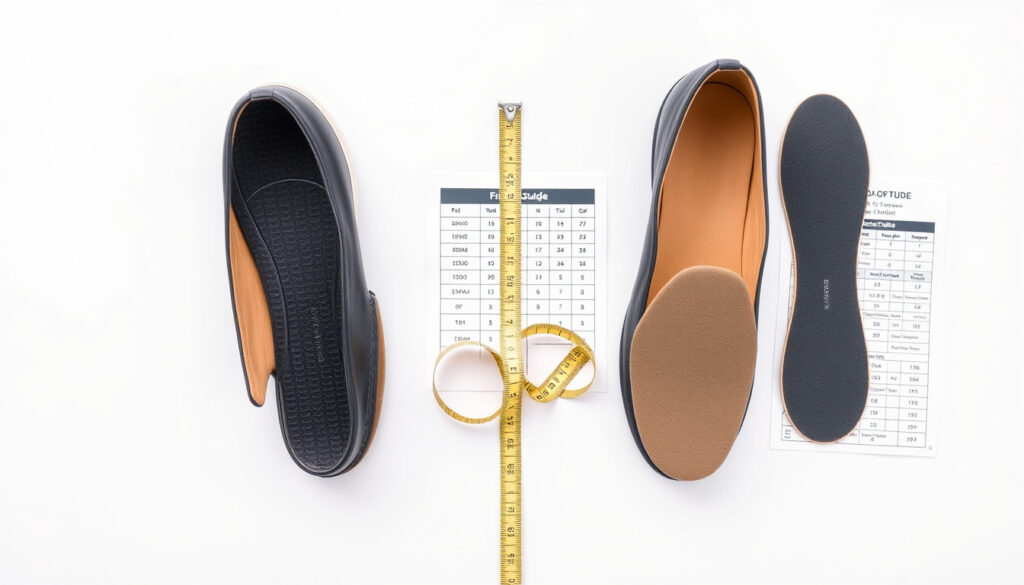
Shoe Inserts vs Insoles: NHS & Podiatrist Sizing Guide
Anyone who has spent a long day on their feet knows when a shoe stops feeling like support, so it matters whether you grab a gel insole or a prescribed orthosis — the Royal College of Podiatry draws a clear line that changes everything from price to fit to how long you should wear them. By the end, you’ll know which belongs in your shoes and which on a prescription pad.
Adults with foot pain: 77% ·
Average daily steps: 8,000–10,000 ·
OTC insoles: $10–$50 ·
Custom orthotics: $200–$800
Quick snapshot
- Insoles add cushioning; functional foot orthoses are built to influence foot function, reduce strain or redistribute pressure (East Sussex Healthcare NHS Trust (NHS foot health guidance)).
- NHS orthotic services can provide prescription insoles, braces, splints, callipers and specialist footwear (NHS England (orthotic services commissioner)).
- A half-size-up only works if the shoe is designed to allow it — inserts reduce the internal space in footwear (Chesterfield Royal Hospital NHS Foundation Trust (NHS orthotics guidance)).
- Start with sessions of no more than one hour and build up over roughly two weeks (Chesterfield Royal Hospital NHS Foundation Trust (NHS orthotics guidance)).
- All-day wear from day one is the fastest route to blisters and arch strain.
- Pain, blisters, rubbing or new symptoms are stop signals — stop and seek a review (Oxford Health NHS Foundation Trust (NHS orthotics patient leaflet)).
One pattern runs through every insert decision: the condition you’re treating dictates the product you need, not the price tag.
| Fact | Detail | Source |
|---|---|---|
| Common foot conditions treated | Plantar fasciitis, flat feet, bunions, heel spurs, overpronation | — |
| Typical insole lifespan | 3 to 6 months with daily use | — |
| Custom orthotic fabrication time | 1 to 2 weeks after podiatrist assessment | — |
| Number of bones in the human foot | 26 | — |
| Orthosis types | Simple insoles, semi-rigid inlays, moulded inlays | Chesterfield Royal Hospital NHS Foundation Trust |
| Initial wear-in (NHS protocol A) | No more than 1 hour at first, building over about 2 weeks | Chesterfield Royal Hospital NHS Foundation Trust |
| Initial wear-in (NHS protocol B) | 15 minutes to 1 hour on day one, increasing over several weeks | East Sussex Healthcare NHS Trust |
Editor’s note: The first four rows are general reference figures from consumer research; the final two rows are taken directly from the linked NHS leaflets.
What is the difference between insoles and inserts?
They sit in the same shoe, but they work differently. Insoles change how the shoe feels; inserts change how the foot behaves.
Key differences: materials, purpose, and fit
- Insoles are generally flatter, softer and built for cushioning; firmer insoles are commonly shaped to contact the arch (Royal College of Podiatry).
- Inserts in the orthotic sense go further: they’re designed to influence foot function, reduce strain or redistribute pressure — the definition at the top of this page.
- On the NHS, orthoses range from simple insoles to semi-rigid inlays and fully moulded inlays — the classification ladder in the table above.
The two categories overlap at the cheap end of the market, but the overlap shrinks the moment you move from soft foam to anything shaped. That shape is the difference between a cushion and a correction.
When to choose insoles vs inserts
- Choose insoles when your feet feel tired, shoes feel hard, or you want a quick comfort upgrade.
- Choose inserts when pain is persistent, localised, or linked to the way your foot hits the ground.
If pain has lasted more than a few weeks, the smart buy is an assessment, not another insole.
What this means: the label on the box matters less than what the product is designed to do. A gel layer won’t correct overpronation, and a rigid shell is overkill if you simply want softer landings.
What insoles do the NHS recommend?
The NHS doesn’t run a loyalty scheme for a single brand. What it does is describe the type of support that suits each problem, and let pharmacists and podiatrists fit the type to the person.
NHS recommended insoles for plantar fasciitis
- For plantar fasciitis, NHS advice centres on over-the-counter insoles with arch support before any custom device is considered.
- Silicone heel cups or full-length insoles are the common recommendation for heel pain.
- For ongoing conditions, NHS orthotic services commission prescription insoles, splints and specialist footwear (NHS England (orthotic services commissioner)).
The practical reading: most plantar fasciitis cases start at the pharmacy, not the orthotics lab. NHS England’s commissioning guidance also makes a point the leaflet rarely spells out — services vary by region, so what you’re offered can depend on where you live.
NHS advice on choosing insoles for flat feet
- For flat feet, the NHS advice pattern is consistent: an insole with medial arch support.
- The insert must fit inside shoes that are deep and wide enough to hold both the foot and the device.
- Adjustable fastenings — laces, buckles or Velcro — do the holding-in work better than slip-ons.
NHS England is open about the uneven picture: orthotic services vary across the country, and the same diagnosis can produce different waiting times and different product ranges depending on your region.
The trade-off: the clinical advice is consistent and cheap — try measured over-the-counter support before custom work. The variable part is access, not logic.
What shoe inserts do podiatrists recommend?
Podiatrists work from a simple premise: put the foot in a better position and the rest of the body follows. The named brands matter less than the features they share.
Podiatrist-recommended brands
- For mild cases, podiatrists may suggest brands such as Superfeet, Powerstep or Sof Sole — firm, full-length inserts with visible arch contact.
- The shared design features: firm arch support and a deep heel cup that holds the heel in place.
- A podiatrist can prescribe or design an insole according to your specific foot-health needs (Royal College of Podiatry).
Start with a firm, full-length insert if you want function; start with a soft one if you want comfort. They are different products aiming at different targets — and buying the wrong one is why most inserts end up in a drawer.
Custom orthotics vs over-the-counter inserts
- Custom orthotics are usually reserved for severe or structural problems — overpronation, leg-length difference, longstanding heel pain.
- Over-the-counter inserts work for mild discomfort and as a test of whether support changes your symptoms.
- Custom work costs considerably more and typically takes 1 to 2 weeks to fabricate after the assessment.
The pattern: podiatrists rarely start with the expensive option. They start with function — what the foot is doing under load — and work up from there.
How do I know what size insoles to get?
Insert sizing is about volume, not just length. An insert that fits your shoe but displaces your foot forward is already the wrong size.
Should I size up if I put insoles in?
- Most insoles are trim-to-fit: cut along the printed line for your shoe size, not your bare foot size.
- Inserts reduce the internal space of the shoe, so the shoe has to be deep and wide enough to cope (see the snapshot above).
- A half-size up can work with thicker insoles — but only if the heel stays locked and the toes don’t drift forward.
Before sizing anything, check what’s already inside the shoe. A removable factory insole often has to come out first, and the new device should never be forced into an unsuitable shoe (East Sussex Healthcare NHS Trust).
How to fix a shoe that is slightly too big?
- Add a full-length cushioned insole to take up volume from heel to toe.
- Add heel grips behind the heel if slippage remains.
- If the shoe still moves on your foot, it’s too big — an insole can’t substitute for the right size.
The goal is a shoe that grips your foot when the laces are snug. If you need the insert to hold the shoe on, the sizing problem is the shoe, not the insole.
Should a big toe touch the front of a shoe?
- No — leave roughly a thumb’s width between your longest toe and the end of the shoe.
- With inserts, the toe will sit slightly further forward because the insole lifts the foot, so re-check fit after adding one.
Is it okay to wear shoes 1/2 size too big?
- Yes, if the insole fills the space and the heel stays stable when you walk.
- No, if your toes drift forward with each step — that’s a recipe for blisters and bruised toenails.
- The safer rule: fix the shoe to the foot, not the foot to the shoe.
What are the best insoles for shoes that are too big?
- Full-length, cushioned insoles add the most volume and keep the foot back from the toe box.
- Heel-cup inserts add volume at the back while reducing heel slip.
- For boots, choose firm arch support — boots already lock the ankle, so the insert’s job is to lock the heel down.
Why sizing matters: the right insert in the wrong-size shoe creates new problems — rubbing, heel slip, even arch strain. Size the shoe first, then size the insert.
The implication: buying the right insert starts with an honest look at your shoe size, not your pain level.
Is it good to put insoles in shoes?
For most people, yes — with two conditions attached: the insert has to match the problem, and the body has to be given time to adapt.
Benefits of using insoles
- Insoles improve comfort, reduce shock and can ease foot pain.
- Functional orthoses reduce strain and redistribute pressure across the foot.
- Mild muscle aching can occur while the body adapts to a changed foot position — but orthoses should not cause significant pain or skin injury (Oxford Health NHS Foundation Trust (NHS orthotics patient leaflet)).
What to use instead of insoles?
- Orthotic sandals with built-in arch support.
- Compression socks for circulation-related discomfort.
- Foot exercises and stretching for conditions like plantar fasciitis.
- Custom orthotics prescribed by a podiatrist.
Alternatives work when they match the mechanism of the problem. If the issue is fatigue, extra cushioning helps; if it’s structural, only support will shift the load. The same buying test applies to any support product: the fill is the function — which is exactly how our Bean Bag Buying Guide: Fillings, Prices & Back Support judges comfort purchases.
Potential drawbacks
- An improperly fitted insole can cause discomfort or worsen an existing condition.
- Inserts reduce the internal volume of shoes, so some pairs simply won’t fit afterwards.
- People with reduced sensation or neuropathy need extra caution and regular skin checks.
The NHS protocol is blunt: mild aching during adaptation is expected, but pain, blisters, rubbing or skin damage is not. If any of those appear, stop and seek a review rather than pushing through — a fixable problem becomes chronic the moment you ignore the warning signs.
The catch: an insole is a tool, not a treatment. Used right, it’s one of the cheapest fixes in foot care. Used wrong, it adds a new problem on top of the old one.
Six rows, one pattern: insoles make the shoe feel better, inserts make the foot work better, and the right choice is whichever matches your actual complaint.
| Feature | Insoles | Inserts (orthotics) |
|---|---|---|
| Primary purpose | Cushioning, comfort, shock absorption | Influence foot function, reduce strain, redistribute pressure |
| Typical materials | Foam, gel, soft fabric | Firm foam, semi-rigid plastic, moulded inlays |
| Price range | $10–$50 over the counter | $15–$60 over the counter; $200–$800 custom |
| Lifespan | 3 to 6 months with daily use | Varies with material and wear |
| Fitting | Trim-to-fit along the cut line | Trim-to-fit or moulded/prescribed to the foot |
| Prescription status | Not required | Can be supplied by NHS orthotic services |
What this means: price is the worst guide to which one you need. The correct category is the cheapest fix for your specific problem — the wrong category is expensive in ways that have nothing to do with the label.
The honest trade-off for anyone standing in the pharmacy aisle with a pair of tired feet.
Upsides
- Better shock absorption and immediate comfort.
- Reduced strain and better pressure distribution under the foot.
- A low-cost first step before committing to custom orthotics.
- Trim-to-fit designs work with most shoes once sized properly.
Downsides
- Not every condition responds to over-the-counter inserts.
- An improper fit can cause rubbing, blisters or new pain.
- Inserts reduce internal shoe volume — some shoes won’t fit afterwards.
- No assessment: you’re self-diagnosing, which is the weak link.
How to fit and break in your inserts safely
The NHS wear-in protocol is deliberately slow. The failures we see happen when people ignore it.
- Remove any removable factory insole before fitting the new insert.
- Trim the insert to your shoe size along the printed cut line, if one is marked.
- Wear the insert for 15 minutes to an hour on day one — at home, not on a ten-mile walk.
- Check your heels and the ball of the foot for redness, rubbing or blisters.
- Increase wear time gradually over roughly two weeks before full-day use.
- Hold off on running, hill walking and sport until low-impact wear is comfortable.
Sudden all-day wear is the most common cause of insert abandonment — blisters, arch strain and a refund request. The two-week ramp exists because the foot’s soft tissues need time to adapt to the new position.
Why the ramp works: a good insert is usually comfortable by day four; a bad fit announces itself by day two. The protocol separates adaptation from injury.
What’s confirmed, what’s not
After reading the NHS leaflets side by side, some things are settled and some remain genuinely open.
What’s settled
- Insoles cushion; inserts are designed to influence how the foot functions.
- NHS orthotic services include prescription insoles, and access varies by region.
- Gradual wear-in and skin checks are standard NHS advice for any orthosis.
What’s variable
- Whether a specific over-the-counter insert fixes a specific condition depends on your foot, your shoe and your activity.
- Whether a half-size-up shoe is acceptable depends on shoe design and foot shape.
- Which brand is “best” is individual — there’s no credible evidence that one brand wins for everyone.
- Custom orthotics help structural problems, but comparing them head-to-head with over-the-counter inserts is apples to oranges.
- Exact efficacy of over-the-counter inserts varies with the individual, the condition and the shoe.
- If two weeks of gradual wear-in doesn’t help, a podiatry assessment is the standard next step.
The read: the certainties are about how the products work; the uncertainties are about how your foot will respond. That gap is exactly what a podiatry assessment is for.
What the guidance says
“Orthotic services may provide prescription insoles, braces, splints, callipers, footwear, spinal jackets and helmets.”
“Mild muscle aching can occur while the body adapts to a changed foot position, but orthoses should not cause significant pain or skin injury.”
Oxford Health NHS Foundation Trust (NHS orthotics patient leaflet)
Editor’s note: This guide draws on UK NHS and podiatry sources cited above. Price ranges are indicative consumer figures and vary by retailer and region.
Read the NHS leaflets carefully and the same principle keeps returning: start with the least invasive support that changes your symptoms, and let a professional step in when it doesn’t. For the average UK walker, the decision is straightforward — buy cushioning when your feet are tired, buy correction when they’re painful, and if the pain outlasts a fortnight of honest wear-in, spend the assessment fee before you spend another pound on trial and error.
Frequently asked questions
What shoe inserts help maintain shoe shape?
Full-length, firm insoles with a defined arch do the most to hold a shoe’s shape, because they fill the internal volume and stop the upper collapsing where the foot is narrowest. The insert needs to match the shoe’s internal width — too thick and the shoe bulges, too thin and the shape problem stays.
What are the best shoe inserts for walking?
For walking, the features to look for are firm arch support and a deep heel cup in a full-length design that spreads impact along the whole foot. Foam-only insoles feel soft in the shop but compress quickly under daily mileage. If you’re also planning long walking days in wet weather, the same layering logic applies above the ankle — see our Rain Jackets for Ireland: Best Brands & Buying Guide.
What shoe inserts are best for boots?
Boots already lock the ankle, so the insert’s main job is to fill volume and support the arch. Full-length, firm inserts are the safest fit; heel-only cups leave the forefoot unsupported inside a stiff boot sole.
How can shoe inserts increase height?
Height inserts add volume under the heel and sometimes the forefoot, which raises the foot inside the shoe. That means the shoe needs enough internal depth to hold the raised foot, and the heel has to stay stable — otherwise you trade height for blisters and ankle wobble.
What shoe inserts are best for heel pain?
NHS guidance commonly points to silicone heel cups or full-length insoles with arch support for heel pain. If the pain persists beyond a few weeks, that’s the signal to stop self-prescribing and ask for a podiatry or GP review.
Related reading
- Bean Bag Buying Guide: Fillings, Prices & Back Support — the same buying logic applies to any support product: the fill decides the function.
- Rain Jackets for Ireland: Best Brands & Buying Guide — for walkers, foot comfort is only half the kit question.
More related posts
 Jaws Moonraker: What Happened to the Bond Henchman
 Ipswich Town vs Sunderland: Head-to-Head, Stats & Results
 Josie Gibson: Lipoedema Diagnosis and Weight Loss
 Translate English to German: Best Free Tools & Tips
 India Women vs South Africa Women: World Cup Final 2025
 UK Take Home Pay Calculator | £50k vs £55k Net
 Trisha Krishnan: Biography, Age, Relationships, and FAQs
 Ancient Roots Olive Oil: Benefits, Reviews, and Where to Buy