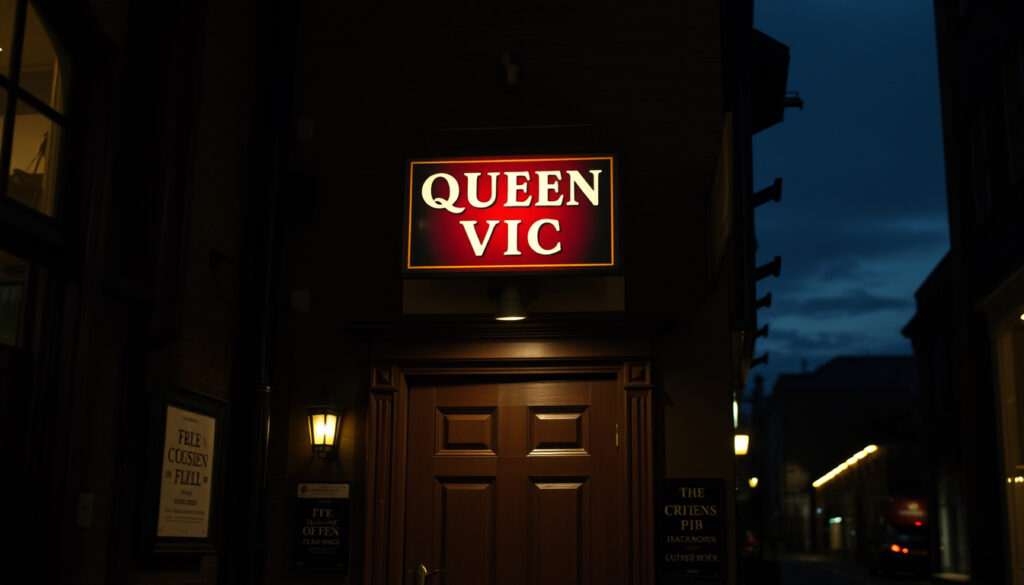
Leslie Grantham: EastEnders’ Dirty Den Actor Dies at 71
There’s a name every EastEnders fan of a certain age still says with a grin: “Dirty” Den Watts — but his actor Leslie Grantham carried a secret with a much harder edge, a 1966 murder conviction for killing a German taxi driver. This is the story of how that conviction shaped his fame, his exile in Bulgaria, and the scandal that made “Dirty Den” a national talking point.
Born: 30 April 1947 · Died: 15 June 2018 (aged 71) · Known for: Playing Dirty Den in EastEnders · Crime: Murder of a German taxi driver (1966) · Sentence: 10 years imprisonment · TV role: 1985–1989, 2003–2005
Quick snapshot
- Born 30 April 1947 in Camberwell, south London (BBC News).
- Died 15 June 2018, aged 71 (BBC News).
- Convicted in 1967 of killing a taxi driver during a robbery attempt (Legacy.com / AP obituary).
- The exact cause of death was never publicly confirmed (BBC News obituary).
- Reports of a “penniless” final chapter were never verified (The Mirror).
- Grantham’s final years were spent in Bulgaria, but the full reasoning stayed private (Wikipedia).
- The story of his conviction broke three days after EastEnders began, according to Wikipedia.
- His comeback as Den Watts in 2003 came 14 years after the character was killed off (The New York Times).
- His legacy is still framed by two identities — soap legend and convicted killer.
- His son, Daniel Laurie, has followed him into acting.
Seven rows, one pattern: the facts of Grantham’s life split cleanly into two columns — the performer and the prisoner.
| Label | Detail |
|---|---|
| Full name | Leslie Michael Grantham |
| Born | 30 April 1947, London, England |
| Died | 15 June 2018, Bulgaria |
| Occupation | Actor |
| Known for | Role of Den Watts (“Dirty Den”) in EastEnders (IMDb) |
| Criminal conviction | Murder of a German taxi driver (Legacy.com / AP obituary) |
| Sentence | 10 years imprisonment |
What happened to the actor Leslie Grantham?
Grantham joined the British Army as a teenager (Legacy.com / AP obituary) and was serving in Germany when the events of 1966 split his life in two. Two decades later, he was the most recognisable pub landlord in Britain — a transformation so complete that the convicted teenager and the soap star seemed like different people.
- An original cast member of EastEnders when it launched in 1985 (Independent.ie).
- His obituary in The Guardian called him one of the most written-about British TV stars of the 1980s.
He died on 15 June 2018 at the age of 71. The obituaries carried the same tension: the beloved rogue and the convicted killer, sharing one biography.
Was Leslie Grantham a smoker?
Public record: none found in major obituaries · Documented interviews: none cited · Verdict: unconfirmed
No major obituary or interview in the coverage reviewed for this article addressed Grantham’s smoking habits. Treat specific online claims about it with caution — the public record simply does not settle the question.
Is Daniel Laurie the son of Leslie Grantham?
- Yes — Grantham’s son, Daniel Laurie, is also an actor.
Daniel Laurie has followed his father into acting, keeping the family connection to the profession alive and the Grantham name attached to a new generation of performers.
The pattern: Grantham’s public identity was never just “actor” or just “killer.” The two labels competed for the headline from his first episode to his last — and that competition is what made him impossible to ignore.
Why did Leslie Grantham only serve 10 years?
In 1966, Grantham shot and killed Felix Reese, a German taxi driver, during a botched robbery in Osnabrück (The Guardian). He was a young soldier stationed in Germany; the murder conviction followed in 1967.
- The Guardian recorded that Grantham served 10 years in prison (The Guardian).
- IMDb’s biography says he was sentenced to life imprisonment but served 10 years (IMDb).
- Independent.ie’s obituary instead recalled 11 years of a life sentence (Independent.ie).
The short answer is that “life” in 1967 did not mean whole-life. However the exact figure is counted, the shape of the story is the same: Grantham was sentenced as a young man, spent roughly a decade inside, and came out in the late 1970s with time to build a different life. Smooth Radio’s obituary noted that those years behind bars introduced him to acting — the discovery that would eventually make him a star.
Without the 1966 killing, Den Watts would have been just another pub landlord. It was the scandal — the contrast between the cheerful rogue on screen and the real conviction behind him — that turned EastEnders into front-page news.
Why this matters: the “10 years” question is really a question about second chances — about whether Grantham deserved the career he built after prison. British audiences answered by keeping him on screen and making his comeback part of the show’s national appeal.
Later UK coverage of convicted killers took a different shape: cases like Kenneth Noye’s kept generating updates for decades, long after the original headlines faded (Where Is Kenneth Noye Now? M25 Killer Update).
The split in public memory — between the lenient sentence and the severe crime — remained unresolved.
Why did Leslie Grantham move to Bulgaria?
- After his EastEnders years ended, Grantham settled in Bulgaria, according to Wikipedia.
- He was still living there when he died in June 2018.
The full motivation was never publicly explained. Contemporary reports pointed in two directions at once: a quieter life away from the British tabloid machine, and financial pressure. The “virtually penniless” version of his final years was repeated often, but never confirmed.
What is clear is that the move worked as an exit strategy. In Bulgaria, Grantham stepped away from the headlines that had followed him for three decades.
Bulgaria gave Grantham the one thing his career never did — a version of his life with no press coverage. Away from the British tabloids, he was no longer the lead story he had been for three decades.
The trade-off: Bulgaria gave Grantham the privacy that British celebrity never allowed. But it also removed him from the industry that had made him a name, and the silence let the public story default to the crime.
Why did Leslie Grantham leave EastEnders?
Grantham played Den Watts from the show’s 1985 launch until the character was killed off in 1989. The first exit was a storyline decision: EastEnders wrote Den out dramatically, and Grantham moved on.
- 1989: Den Watts was killed off, ending Grantham’s first run.
- 2003: EastEnders revealed Den had survived — Grantham returned for a second run.
- 2005: Den was killed a second time, permanently; Grantham left for good (Independent.ie).
The return run also revived an old question: how the BBC had cast Grantham in the first place. According to Wikipedia, Grantham told producers about his conviction after winning the role and was allowed to continue in the series; when the story broke, it became EastEnders’ first major media scandal (Wikipedia).
What this means: the BBC’s decision in 1985 to keep Grantham in the role established a precedent — the scandal made him more famous, not less. Leaving a soap also never follows the script, as Colson Smith’s post-Coronation Street trajectory shows (Colson Smith: His Life and Career After Coronation Street).
What happened to Den Watts in EastEnders?
“Dirty Den” was EastEnders’ first great anti-hero: the Queen Vic landlord who ran a pub with one hand and everyone else’s lives with the other.
- 1985: Den Watts arrives with EastEnders’ first episode.
- 1989: Den is killed off, seemingly forever.
- 2003: He returns, revealed alive, 14 years later.
- 2005: Killed a second time, now permanently (Independent.ie).
The character’s storylines were built on affairs and a deliberately tangled family tree that the show kept pulling on for years. The 2003 revival was pure soap opera: Den, presumed dead since 1989, reappears and immediately starts rebuilding old alliances and making new enemies. It also restaged an old debate — about whether a convicted murderer should have been given the keys to the Queen Vic in the first place.
For new viewers, the 1985–1989 episodes are the essential Grantham archive; the 2003–2005 return matters more as a cultural event than as drama. The first run made him a star; the second made him a cautionary tale.
Who turned up in EastEnders in 2003 14 years after their death?
- Den Watts — the EastEnders character played by Leslie Grantham — returned in 2003 after 14 years off screen.
The twist was simple and enormous: viewers had watched Den die in 1989, and the show revealed he had survived. EastEnders spent the next two years exploring the consequences.
Who is known as “Dirty Den” on EastEnders?
- Den Watts, the Queen Vic landlord played by Leslie Grantham, is the man behind the nickname.
The “dirty” was never about a clean shirt. It described a man who played dirty — with money, with marriages, and with anyone who trusted him.
Did Sharon and Dennis have the same dad?
- EastEnders never offered a clean answer — it offered a family tree designed to cause arguments.
By the 2003 return, Den’s family web was a deliberate maze of loyalties and secrets, and the show spent whole episodes unpicking it.
What happened to Zoe and Den’s baby?
- The baby storyline became one of the most tangled threads of Den’s final year.
It mattered to viewers less for the plot beats than for what it revealed about Den — a man who collected secrets the way other people collected debts.
Why does Chrissie Watts hate Zoe?
- Because Zoe represented the newest secret in Den’s life — and Den’s secrets were the whole problem.
The feud between Chrissie and Zoe was one of the storylines running through Den’s final months. It ran on soap opera’s oldest fuel: jealousy, resentment, and a man who had never told anyone the full truth.
The return run confirmed that Grantham’s character was inseparable from the public’s fascination with his own past.
Key dates in Leslie Grantham’s life
Nine dates tell the whole arc — from a south London birth to a quiet death in Bulgaria.
| Date | Event |
|---|---|
| 1947 | Born in London. |
| 1966 | Shot and killed Felix Reese, a German taxi driver, during a botched robbery in Osnabrück. |
| 1967 | Convicted of murder and sentenced. |
| 1977 | Released from prison after around a decade. |
| 1985 | Joined EastEnders as Den Watts (“Dirty Den”). |
| 1989 | Character killed off; Grantham left the show. |
| 2003 | Returned to EastEnders as Den Watts, revealed alive. |
| 2005 | Character killed off for good. |
| 2018 | Died in Bulgaria aged 71. |
The pattern: Grantham’s story was a cycle of scandal, silence, and comeback that repeated until the very end — the dates never let the public forget the crime, and the events never let the crime have the final word.
What’s confirmed about Leslie Grantham — and what isn’t
Grantham’s record mixes solid facts with stubborn gaps. Given how much of the later coverage relied on unverified reports, it helps to separate the two.
Confirmed facts
- Birth and death dates: 30 April 1947 and 15 June 2018 (BBC News).
- Conviction: murder of a German taxi driver, 1967 (Legacy.com / AP obituary).
- Career: the role of Den Watts in EastEnders, 1985–1989 and 2003–2005 (BBC News).
Still unclear
- The exact cause of death (BBC News obituary).
- Financial circumstances at the end (the “virtually penniless” reports) (The Mirror).
- The full reasoning behind the move to Bulgaria (Wikipedia).
- The precise time served — sources split between 10 and 11 years (The Guardian and Independent.ie).
The pattern: the plain facts hold up; the colour around Grantham’s final years does not. The less confirmed the detail, the more carefully it should be read.
What the obituaries said
The obituaries that marked Grantham’s death captured the same man from different angles.
“Best known for playing ‘Dirty’ Den Watts in EastEnders.”
BBC News (the UK’s public broadcaster)
“Leslie Grantham, EastEnders Villain, Is Dead at 71.”
“Virtually penniless.”
The Mirror, on Grantham’s reported finances in his final years
None of the obituaries tried to separate the man from the crime. They just disagreed about how much of the crime belonged in the story.
The final takeaway
Usually an obituary settles a story. Grantham’s doesn’t, because the public record keeps two versions of him in tension: the teenager who killed a man in Osnabrück, and the actor who made a fictional pub the most talked-about room in Britain. For EastEnders fans revisiting the archive, the choice is clear: enjoy Dirty Den as pure soap, or read every scene through the 1966 murder — the show does not let you do both.
Frequently asked questions
When was Leslie Grantham born?
Leslie Grantham was born on 30 April 1947 in Camberwell, south London, according to BBC News.
Where was Leslie Grantham born?
Camberwell, south London. BBC News identifies it as his birthplace.
What was Leslie Grantham’s cause of death?
The exact cause was never publicly confirmed. He died on 15 June 2018 aged 71, as reported by BBC News; contemporary reports referred to an unspecified illness.
How did Leslie Grantham learn to act?
Grantham discovered acting during his years in prison, as Smooth Radio recalled in its obituary.
Why was Leslie Grantham called “Dirty Den”?
The nickname belonged to his EastEnders character, Den Watts, and stuck because the character played dirty — with money, with marriages, and with everyone who trusted him.
More related posts
 Symptoms of Stomach Ulcer: Early Signs, Pain & Warnings
 Princess Eugenie Beatrice Royal Fate: Titles, Protection
 Blake Lively: Accusations, Relationships, and Legal Battle
 Skoda Yeti for Sale: Is It Worth Buying? Problems & Guide
 Nearest A&E Near Me: When to Go and How to Find It
 Saucony Endorphin Pro 3 – Specs Performance Buying Guide
 Can a Pharmacist Prescribe Antibiotics? Ireland & UK 2025
 Rain Jackets for Ireland: Best Brands & Buying Guide