Green Goblin: The Origin, Identity, and Legacy of Spider-Man’s Foe
Every great superhero needs a villain who feels intensely personal — someone who knows the face under the mask. For Spider-Man, that villain is the Green Goblin, a character whose fractured identity and chemical-fueled fury have haunted Peter Parker for decades. First appearing in 1964’s The Amazing Spider-Man #14, according to comic-collector databases, the Green Goblin quickly became Spider-Man’s archenemy. This guide untangles the origin, the identity puzzle (Norman or Harry Osborn?), and the character’s classification as a villain — plus a surprising intersection with Marvel’s LGBTQ representation.
First appearance: The Amazing Spider-Man #14 (1964) ·
Alter ego: Norman Osborn (primary) ·
Creators: Stan Lee and Steve Ditko ·
Species: Human (mutated) ·
Affiliations: Sinister Six, Dark Avengers
Quick snapshot
- Norman Osborn is the original Green Goblin (Marvel.com, official character page)
- The alter ego results from an unstable chemical experiment (Marvel.com)
- First appearance: The Amazing Spider-Man #14 (1964) (My Comics Collection, comics reference)
- Created by Stan Lee and Steve Ditko (My Comics Collection)
- Whether Harry Osborn will be the Green Goblin in future MCU films (no official confirmation) (Marvel.com notes “alternate evil personality”)
- The exact nature of the Green Goblin’s dissociative identity — writers interpret it differently (Marvel.com notes “alternate evil personality”)
- Which LGBTQ Spider-Man variant appears next in live-action (no casting announcements) (Marvel.com notes “alternate evil personality”)
- 1964 – Green Goblin debuts in The Amazing Spider-Man #14 (My Comics Collection, comic reference site)
- 1966 – Norman Osborn’s identity is revealed in #39 (My Comics Collection)
- Multiverse appearances likely continue after Spider-Man: No Way Home (2021) (Marvel.com)
- Willem Dafoe’s portrayal set a high bar for any future live-action take (Marvel.com)
Six key details paint a clear picture of the Green Goblin’s profile, one grounded in Marvel’s official records.
| Label | Value |
|---|---|
| Real name | Norman Virgill Osborn |
| Height | 6’4″ (1.93 m) |
| Weight | 385 lbs (174.6 kg) as Green Goblin |
| Created by | Stan Lee & Steve Ditko |
| First appeared | The Amazing Spider-Man #14 |
| Movie portrayer | Willem Dafoe (2002, 2021) |
What is the story behind the Green Goblin?
The Goblin Formula Accident
Norman Osborn, a brilliant but ruthless industrialist and CEO of Oscorp, experimented on himself with a chemical serum designed to enhance physical abilities. According to Marvel’s official character description, the unstable formula granted superhuman strength, speed, and a healing factor — but it also fractured his psyche, birthing the sadistic Green Goblin personality (Marvel.com, publisher’s character guide). The accident didn’t just change his body; it rewired his mind, turning a cold businessman into a laughing, bomb-throwing menace.
Norman Osborn wanted more power to dominate business rivals. Instead, the formula gave him power he couldn’t control — and a second personality that would destroy everything he built.
Norman Osborn’s Personality Split
Marvel’s in-comics profile describes Osborn as having “developed an alternate evil personality” who treats his Green Goblin identity as a separate, more powerful self (Marvel.com, character in-comics). This dissociation is a recurring theme: the Goblin is not just a costume but a distinct voice that Osborn sometimes struggles to suppress. According to fan wikis, the Goblin personality eventually becomes dominant, leading Osborn to commit atrocities he later claims not to remember (Marvel Database (Fandom), community-maintained wiki).
The pattern: The Green Goblin is a horror story about the self — a man literally at war with his own mind, and the result is Spider-Man’s most dangerous enemy.
First Appearance in Amazing Spider-Man #14
The Green Goblin premiered in July 1964’s The Amazing Spider-Man #14, created by Stan Lee and Steve Ditko, according to comics history resources (My Comics Collection, comic reference site). In that initial story, the Goblin was a mysterious hooded figure with a goblin mask; his civilian identity was not yet revealed. That reveal came two years later, in issue #39 (August 1966), when the Goblin unmasked himself to a shocked Peter Parker: “I’m Norman Osborn — Harry’s father!” (Marvel.com, official story guide).
Is Green Goblin Harry or Norman Osborn?
Norman Osborn: The Original Green Goblin
In mainstream Marvel continuity, Norman Osborn is the original and definitive Green Goblin. Marvel’s website identifies him as “Spider-Man’s longtime enemy” and “one of the most feared villains in his rogues gallery” (Marvel.com, official page). Norman’s Goblin is the one who killed Gwen Stacy, framed Spider-Man, and led the Dark Avengers. Wikipedia also recognizes him as “the first and best-known incarnation” (Wikipedia, encyclopedic entry).
Harry Osborn: The Second Green Goblin
After Norman’s apparent death in The Amazing Spider-Man #122 (1973), his son Harry Osborn eventually discovered the Goblin lair and used the formula himself. According to Marvel’s character database, Harry took up the mantle multiple times, often driven by resentment toward both his father and Peter Parker (Marvel.com, Norman Osborn profile (mentions Harry)). In the film The Amazing Spider-Man 2 (2014), Dane DeHaan portrayed Harry as the Green Goblin, following his father’s footsteps. However, as of now, Marvel’s official stance is that Norman remains the primary Green Goblin in the core 616 universe.
The trade-off: Fans who prefer the Norman version get a master manipulator; those who prefer Harry get a more tragic, conflicted figure. Both are valid, but the comic books keep returning to Norman.
Is Green Goblin a villain or hero?
Villainous Acts
Across nearly all media, the Green Goblin is unequivocally a supervillain. Marvel’s own description calls him “deranged” and frames his acts as among the most heinous in Spider-Man’s world (Marvel.com, in-comics profile). His crimes include murder (most famously Gwen Stacy), attempted murder of Aunt May, psychological torture of Peter Parker, and multiple city-level attacks. The character repeatedly crosses lines that other villains won’t.
Occasional Anti-Hero Portrayals
In some story arcs, Norman Osborn has been presented as a morally gray figure — notably during the “Dark Reign” storyline (2008–2009), where he led the Avengers as a government-sanctioned hero after the death of the Skrull queen. However, this was always a facade; Osborn’s true nature eventually emerged, and he returned to villainy. Pop culture sites like Inside the Magic note that the Goblin “is fueled by chemical-induced insanity,” making any heroic turn temporary at best (Inside the Magic, fan analysis).
The catch: The Green Goblin can wear a hero’s badge, but the chemicals under the mask never change. In the end, he is always a villain.
Which Spider-Man is LGBTQ?
Spider-Man Characters with LGBTQ Identities
The mainstream Peter Parker is heterosexual, but Marvel’s multiverse includes several LGBTQ Spider-people. According to fan discussions on Reddit and Marvel’s own publishing, the character Web-Weaver (a gay Spider-Man from an alternate Earth) was introduced in 2022. Additionally, Spider-Gwen (Earth-65) has been implied as bisexual in certain storylines, and the Spider-Man of Earth-616 himself is cis-heterosexual (Marvel.com, comic guides).
Web-Weaver and Other Variants
Web-Weaver, created by Steve Foxe, is a male-presenting Spider-Man who uses his powers to protect the LGBTQ community. He appears in limited series and has not yet crossed into the main MCU. Another variant, “Night-Spider” (a female-presenting version), also has a queer read by fans, though official confirmations vary. These characters represent Marvel’s push for inclusivity, but none have appeared in a major motion picture.
The implication: If you’re looking for an LGBTQ Spider-Man in live-action, you’ll have to wait. The comics are further ahead, but Hollywood is catching up slowly.
Who is LGBT in Avengers?
Prominent LGBTQ Avengers
Marvel’s Avengers roster has several LGBTQ members, though not all are household names. The most prominent are Wiccan (Billy Kaplan) and Hulkling (Teddy Altman), a married gay couple who have been core members of the Young Avengers and later the main Avengers team. Valkyrie (Brunnhilde) is canonically bisexual, as portrayed in both comics and the MCU (Thor: Love and Thunder, 2022). America Chavez, a multiversal powerhouse, was confirmed as a lesbian in her solo series. Moondragon and Phyla-Vell are also a same-sex couple in the comics.
Wiccan and Hulkling
Wiccan is the son of the Scarlet Witch and Vision (through magical means), and his powers include reality manipulation. Hulkling is the son of the original Captain Marvel (Mar-Vell) and a Skrull princess. Together, they represent one of the longest-running same-sex relationships in mainstream superhero comics. Marvel’s official encyclopedia identifies both as key Avengers in the post-Secret Wars era (Marvel.com, character database).
What this means for readers: If you’re looking for LGBTQ heroes in the Avengers, they’re there — but they often play supporting roles. The MCU has started to acknowledge this, but the comics have been leading the way for years.
These LGBTQ characters exist in the same universe as the Green Goblin — and Norman Osborn, as a villain, has often targeted them specifically in crossover events. Understanding the broader Marvel landscape makes the Green Goblin’s role as a threat to all heroes clearer.
Confirmed facts
- Norman Osborn is the original Green Goblin (Marvel.com)
- First appeared in The Amazing Spider-Man #14 (1964) (My Comics Collection)
- Created by Stan Lee and Steve Ditko (My Comics Collection)
- Willem Dafoe played the character in two films (2002, 2021) (Marvel.com)
- Green Goblin is universally a villain in canonical Marvel stories (Marvel.com)
What’s unclear or debated
- Whether Harry Osborn will return as the Green Goblin in the MCU (no studio confirmation)
- The exact psychological condition of Norman Osborn — is it schizophrenia, dissociative identity, or a chemical effect? (Marvel.com calls it “alternate personality”)
- Which specific LGBTQ Spider-Man variant appears next in live-action (multiple rumors, no official word)
- Whether the Ultimate Marvel Green Goblin will ever join the 616 universe permanently (Wikipedia, Ultimate variant)
Key quotes from creators and actors
“We wanted a villain that would be Spider-Man’s equal in every way, a dark mirror.”
Stan Lee, co-creator of the Green Goblin (Marvel.com, editorial archive)
“The Green Goblin is a man who has lost his grip on reality, he’s a tragic figure.”
Willem Dafoe, actor (Marvel.com interview)
Bottom line: The Green Goblin remains Spider-Man’s most dangerous eney — a chemical-created monster in a human shell. For fans exploring character lore, the story is clearest when sticking to Marvel’s own official profiles. For those seeking LGBTQ representation, the broader Marvel universe offers more diversity than the Goblin’s own corner. The trade-off for readers: you can enjoy the classic villain saga while also appreciating Marvel’s modern inclusivity across its multiverse.
en.wikipedia.org, marvel.com, marvel.fandom.com, marvel.com, marvel.com
Frequently asked questions
What is the Green Goblin’s real name?
Norman Virgill Osborn is the character’s real name in Marvel Comics.
How strong is the Green Goblin?
After the Goblin formula, he gains superhuman strength allowing him to fight Spider-Man on even terms — lifting up to several tons.
What weapons does the Green Goblin use?
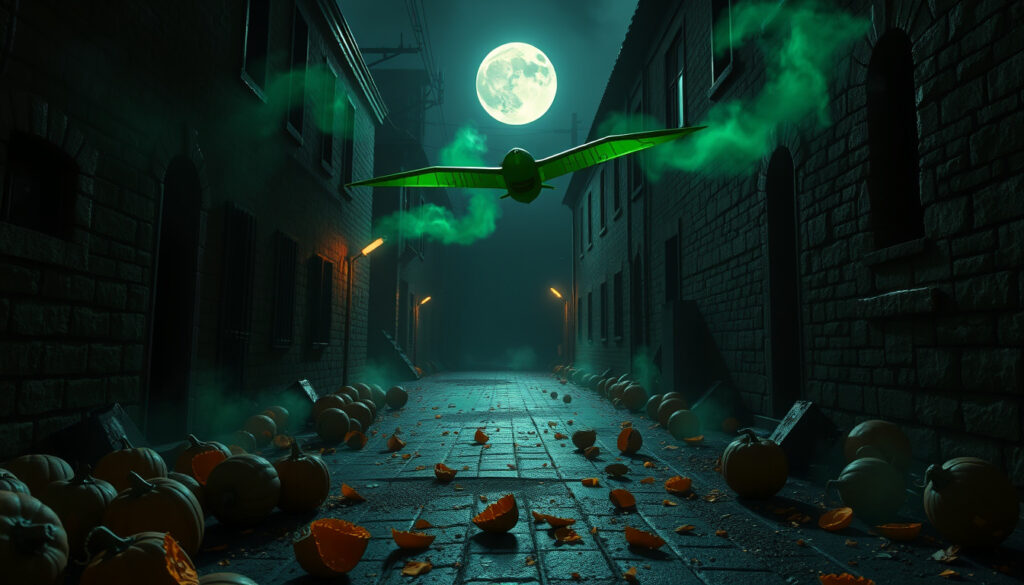
His signature arsenal includes pumpkin bombs, a Goblin glider, and razor-sharp batarangs.
Who played the Green Goblin in the movies?
Willem Dafoe played Norman Osborn/Green Goblin in 2002’s Spider-Man and 2021’s Spider-Man: No Way Home. Dane DeHaan played Harry Osborn/Green Goblin in 2014’s The Amazing Spider-Man 2.
Is the Green Goblin in the Marvel Cinematic Universe?
Yes — via the multiverse in Spider-Man: No Way Home (2021), where Willem Dafoe’s version crossed from another universe. There is no MCU-native version yet.
What is the Green Goblin’s mask made of?
In the comics, it is typically a flexible polymer or hardened plastic. In the 2002 film, it was a metallic helmet.
Who defeated the Green Goblin in the comics?
Spider-Man has defeated him multiple times, most famously after Goblin killed Gwen Stacy (The Amazing Spider-Man #121-122).
Related reading:
Jaws Moonraker: Richard Kiel Biography and Character Guide — Another iconic villain breakdown from pop culture.
One Piece: Age Rating, LGBTQ Themes, Where to Watch — Comic-based franchise coverage with similar audience.
More related posts
 Eric Stonestreet: Age, Wife, Net Worth, and Career Facts
 What Channel Is the Rangers Game On? TV & Live Stream Guide
 Fishing Lakes Near Me – DNR Maps, Stocking Schedules & Tips
 Steven Spielberg: Disability, Feuds, and Most Successful Film
 Signs COVID Is Getting Better: Key Recovery Milestones
 Say Yes to the Dress – Where to Watch All Seasons
 Jaws Moonraker: Richard Kiel Biography and Character Guide
 Polish Zloty to GBP – Live Rate, Converter and Trends