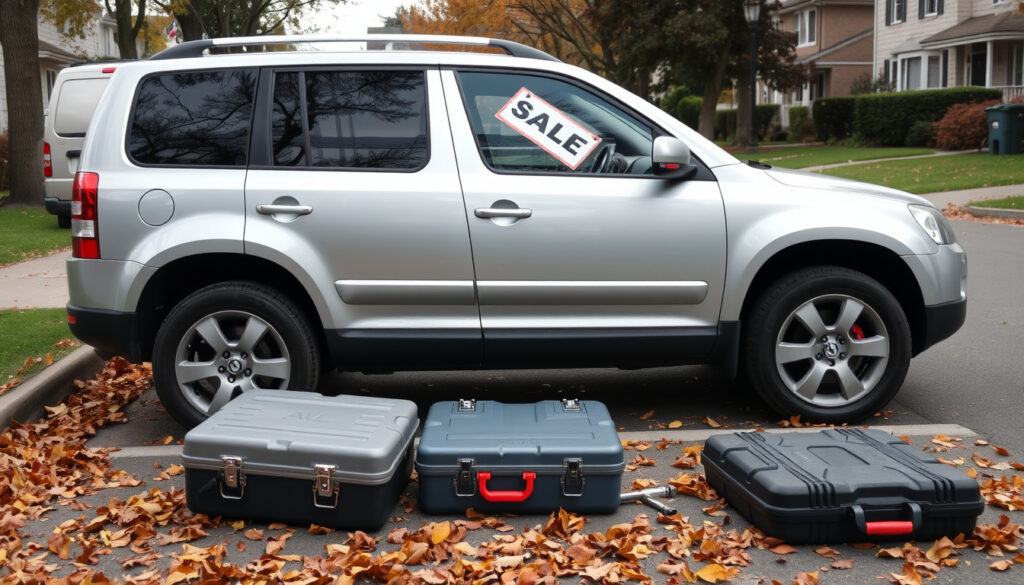
Skoda Yeti for Sale: Is It Worth Buying? Problems & Guide
There’s something refreshing about a car that doesn’t take itself too seriously, yet still delivers where it counts. The Skoda Yeti, built between 2009 and 2017, carved out a loyal following precisely because it refused to fit neatly into any single category — part compact SUV, part estate, with a dash of quirky charm. If you’re scanning listings for a Skoda Yeti for sale, you already know the challenge: separating the genuinely well-kept examples from those hiding expensive surprises.
Production years: 2009–2017 ·
Body style: Compact SUV / Estate ·
Engine options: 1.2 TSI, 1.4 TSI, 1.8 TSI, 2.0 TDI ·
4×4 system: Haldex coupling (on 4×4 models) ·
Trim levels: S, SE, Elegance, Laurin & Klement, Monte Carlo, Outdoor ·
Jeremy Clarkson’s verdict: “The poor man’s Porsche”
Quick snapshot
- Exact reliability varies by individual car and maintenance history
- Whether the Yeti is a good buy today depends on personal priorities and budget
- The exact number of Yetis sold in Ireland/UK is not publicly available
- Focus on 2014-2017 facelift models for better reliability
- Budget £1,000-2,500 for potential timing chain or DSG repairs
- Consider buying from owners who can prove service history
The Yeti’s specs stack up well against rivals from the era. Nine key dimensions and drivetrain details tell the story:
| Specification | Value |
|---|---|
| Manufacturer | Škoda Auto |
| Class | Compact SUV / Estate |
| Production years | 2009–2017 |
| Body styles | 5-door SUV |
| Engines | 1.2 TSI (105 hp), 1.4 TSI (122 hp), 1.8 TSI (152 hp), 2.0 TDI (110/140/170 hp) |
| Transmission | 5-speed manual, 6-speed manual, 6/7-speed DSG |
| Drive layout | Front-wheel drive or all-wheel drive (Haldex) |
| Wheelbase | 2,578 mm |
| Boot capacity | 405–1,760 litres (rear seats folded) |
Is it worth buying a Skoda Yeti?
For buyers who value space efficiency and driving fun over badge prestige, the Yeti still holds its own. But the repair bills on neglected examples can quickly erase any savings.
Pros and cons of the Skoda Yeti
Upsides
- Spacious interior for its size — boot capacity ranges 405-1,760 litres (Wikipedia)
- Excellent 4×4 capability thanks to Haldex coupling (Parkers)
- Fun to drive, especially with the 2.0 TDI 170 diesel
- Compact dimensions make it easy to park and manoeuvre
Downsides
- Some engines have known timing chain issues — 1.2 TSI from 2009-2013 affected (CarsGuide)
- Polarising design that dates the car
- Interior can feel dated compared to newer competitors
- Repair costs for 4×4 system and DSG gearbox can be high
Who should buy a Skoda Yeti?
The Yeti suits buyers who need the practicality of an estate with a touch of SUV ground clearance. Families, outdoor enthusiasts, and anyone who wants a car that’s larger inside than outside will appreciate its clever packaging. Performance enthusiasts may also find the 2.0 TDI 170 4×4 model appealing for its sharp handling.
Running costs and economy
Insurance groups range from 12 to 24 depending on the model, making it affordable for most drivers. Fuel economy varies: the 1.6 TDI diesel can achieve around 55 mpg, while petrol models average 40 mpg. Parts are widely available and labour costs at independent garages are moderate, though brake wear is faster than on Asian rivals (CarsGuide).
The pattern: buying a Yeti is a trade-off between upfront value and potential repair costs. The catch is that a well-maintained example offers genuine long-term savings, while a neglected one can become a money pit.
What are common Skoda Yeti problems?
Early 1.2 TSI engines have a documented weakness that could cost you £1,500+ if not addressed. This is the single biggest financial trap for Yeti buyers.
Electrical issues: door locks and windows
Owners report intermittent door lock actuator failures and window regulator issues, particularly on pre-facelift models. These are typically fixable for £150-300 per door at a specialist.
Engine problems: 1.2 TSI timing chain failure
The 1.2 TSI engine (2009-2013) has a known timing chain tensioner failure. CarsGuide notes the chain was marketed as “lifetime” but fails prematurely in early models. A revised tensioner was fitted from 2012 onwards. If the chain snaps, the engine is typically a write-off.
Suspension and steering noises
Rear wheel bearing noise is a frequent complaint. Wheel speed sensors also fail regularly (Team-BHP). Replacement bearings cost £60-100 each, but diagnosing which one is faulty can be tricky.
Rust on rear wheel arches
Some pre-facelift Yetis show rust around the rear wheel arches, particularly in regions with winter road salt. A thorough inspection of these areas is advisable before purchase.
Beyond these specific faults, some DSG gearboxes (both 6-speed and 7-speed) experience mechatronic unit failures costing thousands to fix (YouTube). Post-2012 diesel models can also suffer from DPF and EGR clogging due to emissions equipment. Water leaks into the footwell from blocked sunroof drains are another recurring issue.
Confirmed facts
- Production years and engine options as listed are verified (Wikipedia)
- Clarkson’s quote is confirmed from his 2011 Top Gear review (Top Gear)
- Timing chain tensioner failures on early 1.2 TSI engines are widely documented (CarsGuide)
What’s unclear
- Exact reliability varies by individual car and maintenance history
- Whether the Yeti is a good buy today depends on personal priorities and budget
- The exact number of Yetis sold in Ireland/UK is not publicly available
- Whether the 2014 facelift genuinely improved styling and technology is subjective (Carwow details changes, but “improved” depends on personal taste)
What did Jeremy Clarkson say about the Skoda Yeti?
Clarkson’s 2011 review created a cult following that still drives demand today. Understanding what he actually said helps you see past the hype to the car’s genuine strengths.
Clarkson’s overall verdict
In a 2011 episode of Top Gear, Jeremy Clarkson famously called the Yeti “the poor man’s Porsche”, praising its unexpectedly sharp handling. The quote has since become the car’s most enduring tagline.
What he praised: handling and space
Clarkson applauded the Yeti’s road manners — it handled corners with a poise that defied its SUV silhouette. He also praised the clever interior packaging that offered estate-like space in a compact footprint.
What he criticized: looks and anoraks
He quipped that the Yeti’s styling looked “like it was designed by someone wearing an anorak,” a reference to its utilitarian aesthetic. This polarising design is exactly why some buyers love it and others can’t stand it.
The trade-off: the Yeti’s cult status means some sellers inflate prices based on nostalgia. A good example is worth a fair price, but don’t overpay simply because a TV presenter loved it.
Which Skoda Yeti model is best?
The most powerful diesel offers the best driving experience, but it also carries the highest potential repair costs. The sweet spot lies in the middle of the range.
Petrol vs diesel engines
Four engines, one clear pattern: diesels are frugal but expensive to fix, petrols are quieter but some have timing chain issues.
| Engine | Power | Fuel economy (combined) | Best for |
|---|---|---|---|
| 1.2 TSI (2009-2013) | 105 hp | 44 mpg | Avoid — timing chain risk |
| 1.4 TSI (2011-2017) | 122 hp | 42 mpg | Best petrol — no chain issues |
| 1.8 TSI | 152 hp | 38 mpg | Rare but powerful petrol choice |
| 2.0 TDI 110/140/170 | 110-170 hp | 50-55 mpg | Best all-rounder (140+ models) |
4×4 vs two-wheel drive
The Yeti’s 4×4 system uses a Haldex coupling that automatically engages the rear wheels when front wheels slip (Parkers). This gives genuine off-road ability in mud and snow, but adds weight and mechanical complexity. Two-wheel drive versions are lighter and cheaper to maintain, making them better for urban commuters.
Trim level guide: S, SE, Elegance, L&K, Monte Carlo
Five trims, but only a few hit the value sweet spot (± AutoTrader UK):
- S — basic spec, manual windows, steel wheels. Avoid unless budget is extremely tight.
- SE — adds air conditioning, alloy wheels, Bluetooth. Best value for money.
- Elegance — climate control, leather, parking sensors. The comfortable choice.
- Laurin & Klement (L&K) — top luxury trim with full leather, heated seats, premium audio.
- Monte Carlo — sporty styling tweaks (black wheels, red stitching) but no mechanical changes.
The pattern: SE trim delivers the best balance of features and value. The implication: look for a 2.0 TDI 140 SE 4×4 if you want the Yeti as it was intended to be driven.
How reliable is the Skoda Yeti?
The Yeti scores average in reliability surveys, but that average masks two very different stories: early cars with problems versus later cars that are genuinely dependable.
Owner satisfaction surveys
The Yeti scored 3.5 out of 5 in the 2018 What Car? Reliability Index, with common complaints being electrical and suspension issues (What Car?). In a 2015 Auto Express Driver Power survey, Yeti owners praised practicality but flagged high repair costs for the 4×4 system.
Common reliability issues by year
Model year determines which faults are likely, and the pattern is clear: earlier cars carry more risk.
| Year | Known issues | Risk level |
|---|---|---|
| 2009-2013 | Timing chain tensioner, DSG mechatronic, wheel bearings | High |
| 2014-2015 | DPF/EGR on diesels, AdBlue sensor failures | Medium |
| 2016-2017 | Minor electrical glitches, infotainment bugs | Low |
Long-term ownership costs
High-mileage diesel Yetis are often preferred over low-mileage petrols because early issues get resolved through use (Briskoda Forum). Parts are widely available and labour costs are moderate, but budget £1,000-2,500 for potential major repairs on higher-risk models.
The trade-off: a 2014-2017 Yeti with full service history is a genuinely reliable used car. An early model without documented chain replacement is a gamble.
“It’s the poor man’s Porsche. It handles like nothing else in its class.”
— Jeremy Clarkson, Top Gear (2011)
The Skoda Yeti scored 3.5 out of 5 in the 2018 What Car? Reliability Index, with common complaints being electrical and suspension issues.
— What Car? reliability survey (2018)
In a 2015 Auto Express Driver Power survey, Yeti owners praised the car’s practicality but noted high repair costs for the 4×4 system.
— Auto Express owner poll (2015)
For buyers in the UK and Ireland, the choice is clear: target a 2014-2017 facelift model with the 2.0 TDI 140 SE 4×4, verify the timing chain has been done (or buy a petrol 1.4 TSI), and budget £1,000 for post-purchase servicing. Anything else is a roll of the dice that could cost you significantly more in the long run.
If you are considering a Skoda Yeti for sale, you might also find the Skoda Yeti for sale in Ireland guide useful for local listings and pricing.
Frequently asked questions
Does the Skoda Yeti have a spare wheel?
Most Yetis come with a tyre repair kit instead of a full-size spare. Some models offer a space-saver spare as an optional extra. Check the boot floor on any car you’re viewing.
What is the boot size of the Skoda Yeti?
The Yeti has a boot capacity of 405 litres with the rear seats up, expanding to 1,760 litres with the seats folded down, according to Wikipedia.
Is the Skoda Yeti good for off-roading?
Yes, particularly the 4×4 models with the Haldex coupling system. Parkers confirms it offers genuine off-road ability for light to moderate terrain.
How much does it cost to insure a Skoda Yeti?
Insurance groups range from 12 to 24, depending on engine and trim. The 1.2 TSI is cheapest to insure, while the 2.0 TDI 170 4×4 sits higher. Always get a quote before committing.
What is the best year for a used Skoda Yeti?
Honest John recommends 2014-2017 facelift models as they avoid the worst of the early timing chain issues and benefit from improved tech and styling.
Does the Skoda Yeti have Apple CarPlay?
Only the very last models (2016-2017) with the updated infotainment system offer Apple CarPlay and Android Auto as standard. Earlier models have basic Bluetooth and USB connectivity.
What is the towing capacity of a Skoda Yeti?
The Yeti can tow up to 2,000 kg (braked) for the 2.0 TDI 170 4×4 model, and around 1,200 kg for petrol variants. Always check the specific model’s plate for exact limits.
For buyers specifically searching “Skoda Yeti for sale” in the UK and Irish markets, the recommendation is clear: target a 2.0 TDI 140 SE 4×4 from 2014-2017, verify service history especially for the timing chain, or choose the 1.4 TSI petrol to avoid diesel-specific issues entirely.
More related posts
 Fred Sirieix: Wife, Children, Net Worth, and Career Facts
 Saucony Endorphin Pro 3 – Specs Performance Buying Guide
 Giant African Land Snail: Risks, Pet Care, and Invasive Impact
 What Is a Tariff – Definition, Types and Economic Impacts
 12 Days of Christmas Lyrics – Full Text, History and Myths Debunked
 What Is a Rainbow Baby – Meaning, Origin and Support
 Gmail Passwords Data Breach – Facts Timeline and Protection Guide
 Multan Sultans vs Lahore Qalandars: PSL 2026 Scorecard