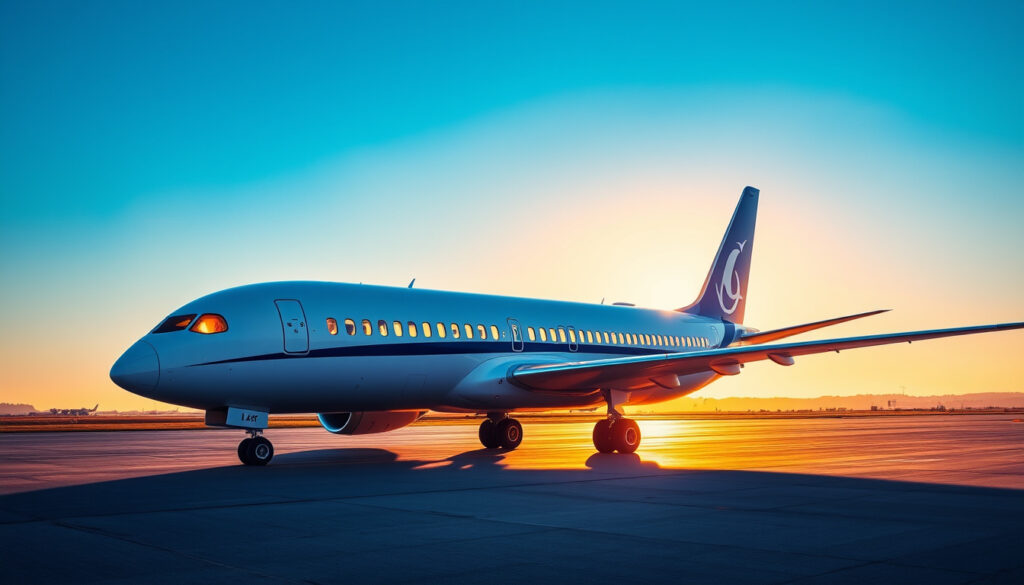
Boeing 787-9: Is It Safe, Comfortable, and a Good Plane
Flying long-haul is rarely this comfortable, but the Boeing 787-9 Dreamliner has earned a reputation for making it feel almost effortless. Since entering service on August 7, 2014, this mid-size wide-body has logged over a decade of commercial flights without a single fatal incident specific to the 787-9 variant.
Range: 7,565 nmi (14,010 km) ·
Max passengers: 296 ·
Entry into service: August 7, 2014 ·
Safety record: No fatal accidents as of 2025 ·
Wingspan: 197 ft 4 in ·
Engines: General Electric GEnx
Quick snapshot
- 787-9 entered service with All Nippon Airways on August 7, 2014 (Wikipedia (aviation encyclopedia))
- No fatal accidents involving the 787-9 as of 2025 (Aviation Safety Network (aircraft incident database))
- Composite fuselage construction (Wikipedia (aviation encyclopedia))
- Range: 7,565 nmi (14,010 km) (Wikipedia (aviation encyclopedia))
- Exact seat pitch and width vary by airline configuration (Wikipedia (aviation encyclopedia))
- Future production rates and orders remain uncertain (Wikipedia (aviation encyclopedia))
- Specific causes of the June 2025 Air India 787-8 crash still under investigation (AirGuide (aviation safety analysis))
- 2003: Boeing holds naming competition; “Dreamliner” chosen (Wikipedia (aviation encyclopedia))
- August 7, 2014: 787-9 enters service with ANA (Wikipedia (aviation encyclopedia))
- 2020-2021: 787 deliveries halted due to production quality issues; no safety incidents (Wikipedia (aviation encyclopedia))
- June 12, 2025: First fatal accident for 787 family (Air India 787-8) (AirGuide (aviation safety analysis))
- Boeing aims to resume full 787 delivery rate by 2026 (Wikipedia (aviation encyclopedia))
- Airline operators continue to expand 787-9 routes across Asia and Europe (Wikipedia (aviation encyclopedia))
- FAA and EASA monitoring after the 787-8 crash; no fleet-wide grounding (AirGuide (aviation safety analysis))
Here are the core specifications for the Boeing 787-9 at a glance.
| Specification | Value |
|---|---|
| Range | 7,565 nmi (14,010 km) |
| Max passengers | 296 (typical 3-class) |
| Length | 206 ft (63 m) |
| Wingspan | 197 ft 4 in (60.1 m) |
| Cruise speed | 560 mph (Mach 0.85) |
| Entry into service | August 7, 2014 |
| Number built | Over 600 as of 2025 |
The pattern is clear: the 787-9 delivers competitive range and passenger capacity in a mid-size frame.
Is the Boeing 787-9 a good plane?
What makes the 787-9 a good plane?
- Fuel efficiency: 20% better than previous generation wide-bodies (Wikipedia (aviation encyclopedia))
- Passenger comfort: higher cabin pressure (6,000 ft equivalent), larger windows, LED mood lighting (Wikipedia (aviation encyclopedia))
- No fatal accidents recorded for the 787-9 (Aviation Safety Network (aircraft incident database))
- Versatility for airlines: capable of long-haul point-to-point routes (Wikipedia (aviation encyclopedia))
Pros and cons of the Boeing 787-9
Upsides
- Excellent fuel economy reduces airline costs and emissions
- Quieter cabin: noise levels up to 60% lower than older jets (Wikipedia (aviation encyclopedia))
- Lower cabin altitude reduces jet lag for passengers
- Strong safety record for the 787-9 type
Downsides
- Varied seat pitch across operators (31-32 inches in economy is tight for some)
- Production delays and quality issues have frustrated airlines (Wikipedia (aviation encyclopedia))
- Battery-related incidents in early 787 operations (resolved) (Wikipedia (aviation encyclopedia))
- Premium seat availability limited on some routes
How does the 787-9 compare to other wide-body aircraft?
- Compared to Boeing 777: 787-9 is lighter, more fuel efficient, but carries fewer passengers (Wikipedia (aviation encyclopedia))
- Compared to Airbus A350: both use composite materials; A350 has slightly longer range but higher capacity (Wikipedia (aviation encyclopedia))
- Compared to 787-8: 787-9 is 20 ft longer, carries more passengers, and has 400 nmi more range (Wikipedia (aviation encyclopedia))
How safe is the Boeing 787-9?
Safety record of the 787-9
- Zero fatal accidents involving the 787-9 as of 2025 (Aviation Safety Network (aircraft incident database))
- Composite fuselage provides better corrosion resistance and fatigue life (Wikipedia (aviation encyclopedia))
- Rigorous FAA/EASA certification process (Wikipedia (aviation encyclopedia))
Common safety concerns addressed
- Early battery fires on 787-8 in 2013 led to redesigned battery system; no repeat incidents (Wikipedia (aviation encyclopedia))
- Production quality issues (2020-2021) were about gap tolerances, not flight safety (Wikipedia (aviation encyclopedia))
- Whistleblower claims in 2024 about improper assembly are under review but no in-flight failures linked (Wikipedia (aviation encyclopedia))
Comparison to other Boeing models
- 787-9 has a perfect safety record for its type, unlike the 737 MAX (two fatal crashes) (Wikipedia (aviation encyclopedia))
- Older 747 models have higher accident rates due to longer service history (Wikipedia (aviation encyclopedia))
- The June 2025 787-8 crash is the first fatal hull loss for the entire Dreamliner family (AirGuide (aviation safety analysis))
What is the seating arrangement on a Boeing 787-9?
Typical seat map configurations
- Varies by airline: United uses 3-class (48 business, 88 premium economy, 116 economy) (Wikipedia (aviation encyclopedia))
- KLM: 2-3-2 in economy, 1-2-1 in business (Wikipedia (aviation encyclopedia))
- Air France: 1-2-1 business class, 2-3-2 economy (Wikipedia (aviation encyclopedia))
Business class cabins
- Most airlines feature lie-flat seats with direct aisle access (1-2-1 layout) (Wikipedia (aviation encyclopedia))
- Seat pitch: 60-78 inches depending on airline (Wikipedia (aviation encyclopedia))
- Features: personal climate control, larger IFE screens, noise-canceling headphones
Economy seat pitch and width
- Seat pitch: 31-32 inches typical (Wikipedia (aviation encyclopedia))
- Seat width: 17-18 inches (3-3-3 configuration) (Wikipedia (aviation encyclopedia))
- Some airlines use 2-4-2 layout in premium economy
- Window seats have electronic dimmable windows (Wikipedia (aviation encyclopedia))
Best seats for different preferences
- Exit row seats: extra legroom, but no under-seat storage (Wikipedia (aviation encyclopedia))
- Bulkhead seats: legroom may be limited by wall, but no reclining passenger in front (Wikipedia (aviation encyclopedia))
- Window seats near rear: quieter, less foot traffic
- Middle seats in center section: least desirable, especially for solo travelers
Seat pitch is tight at 31 inches on many economy layouts. Passengers who value legroom should pay extra for exit rows or upgrade to premium economy — the difference is significant.
Which Boeing model should you avoid?
Models with safety concerns
- 737 MAX: grounded after two fatal crashes (Lion Air Flight 610, Ethiopian Airlines Flight 302) (Wikipedia (aviation encyclopedia))
- 737 Classic and older variants have higher accident rates per flight hour (Wikipedia (aviation encyclopedia))
- 747-400: older design, not as fuel efficient, higher hull-loss rate (Wikipedia (aviation encyclopedia))
Why the 787-9 is not among them
- No grounding events for the 787-9 (Aviation Safety Network (aircraft incident database))
- Different design philosophy: composite fuselage, modern fly-by-wire, redundant systems (Wikipedia (aviation encyclopedia))
- Regulatory confidence: FAA found no systemic issue after 2025 787-8 crash (AirGuide (aviation safety analysis))
The 737 MAX grounding and its impact
- 737 MAX grounded from March 2019 to November 2020 globally (Wikipedia (aviation encyclopedia))
- Boeing’s reputation suffered, but the 787-9 program was not affected (Wikipedia (aviation encyclopedia))
- 737 MAX now faces continued scrutiny and slower adoption (Wikipedia (aviation encyclopedia))
What is the best seat on a Boeing 787-9?
Best seats for legroom
- Exit rows (rows with extra legroom) — typically rows 20-30 depending on airline configuration (Wikipedia (aviation encyclopedia))
- Bulkhead rows (first row of each cabin) — legroom may be limited by the wall, but no recline from in front (Wikipedia (aviation encyclopedia))
- Premium economy seats — typically 38-inch pitch (Wikipedia (aviation encyclopedia))
Best seats for quietness
- Window seats in the rear of the aircraft — less galley and lavatory traffic (Wikipedia (aviation encyclopedia))
- Aft seats near the tail are farthest from engine noise (though 787 is already quiet) (Wikipedia (aviation encyclopedia))
- Business class seats forward of the wing can be quieter in some layouts
Best seats for views
- Window seats on either side — but avoid wings if you want a clear view (Wikipedia (aviation encyclopedia))
- Seats in the last few rows of economy may have unobstructed views (Wikipedia (aviation encyclopedia))
- Electronic dimmable windows allow you to keep the view without glare (Wikipedia (aviation encyclopedia))
Seats to avoid
- Middle seats in the center section (e.g., 3-3-3 layout) (Wikipedia (aviation encyclopedia))
- Seats near lavatories or galleys — noise and foot traffic (Wikipedia (aviation encyclopedia))
- Bulkhead rows in economy — reduced legroom and no underseat storage (Wikipedia (aviation encyclopedia))
- Last row of a cabin — may have limited recline or proximity to galley (Wikipedia (aviation encyclopedia))
Booking an exit row or premium economy is the easiest way to improve comfort. For solo travelers, a window seat near the rear balances quietness and convenience.
Specifications: Boeing 787-9 vs. competitors
Seven key parameters show where the 787-9 sits between the smaller 787-8 and the larger 777-300ER.
| Parameter | Boeing 787-9 | Boeing 787-8 | Boeing 777-300ER |
|---|---|---|---|
| Length | 206 ft (63 m) | 186 ft (57 m) | 242 ft (74 m) |
| Wingspan | 197 ft 4 in | 197 ft 4 in | 212 ft 7 in |
| Range | 7,565 nmi | 7,305 nmi | 7,825 nmi |
| Max passengers | 296 | 248 | 396 |
| Cruise speed | Mach 0.85 | Mach 0.85 | Mach 0.84 |
| Engines | GEnx / Trent 1000 | GEnx / Trent 1000 | GE90-115B |
| Entry into service | 2014 | 2011 | 2004 |
The pattern here is that the 787-9 offers the best balance of range and efficiency for mid-size long-haul operations.
What passengers and industry experts say
“The Dreamliner family is designed to be efficient and versatile so airlines can open new nonstop routes.”
Boeing official website (manufacturer)
“The Boeing 787-9 ‘Dreamliners’ got their nickname from a worldwide competition Boeing held in 2003.”
KLM aircraft page (airline operator)
“The 787-9 offers a 20% improvement in fuel efficiency over the aircraft it replaces, making it a key asset for long-haul operations.”
Wikipedia (aviation encyclopedia)
Summary: Should you choose the Boeing 787-9?
The 787-9 stands out as a modern, reliable, and passenger-friendly aircraft. Its impeccable safety record (no fatal accidents for the type), fuel efficiency, and comfortable cabin make it a smart choice for both airlines and travelers. The only real downside is the variability in seat pitch and configuration across operators — so check the seat map before you book. For passengers flying long-haul, the Dreamliner’s lower cabin altitude and larger windows are tangible upgrades over older Boeing models. For airlines, the 787-9’s economics are hard to beat on mid-range long routes. Given the track record, you can board a 787-9 with confidence — especially if you choose a seat that matches your comfort priorities. The takeaway for any traveler is that the 787-9 delivers a reliably pleasant experience across the board.
For a detailed breakdown of specific airline configurations, you can compare these with the Dreamliner seat maps and safety guides for the same aircraft type.
Frequently asked questions
What is the range of the Boeing 787-9?
The Boeing 787-9 has a range of 7,565 nautical miles (14,010 km), making it capable of flying nonstop between most major city pairs worldwide.
How many passengers can the Boeing 787-9 carry?
In a typical three-class configuration, the 787-9 seats up to 296 passengers. Some airlines can configure it for up to 290-300 in higher-density layouts.
Which airlines operate the Boeing 787-9?
Major operators include KLM, United Airlines, Air France, Etihad, Turkish Airlines, Air India, British Airways, and many more. Over 600 have been built as of 2025.
What is the difference between the 787-8 and 787-9?
The 787-9 is about 20 feet (6 m) longer, carries 50-70 more passengers, and has a slightly longer range. Both share the same wingspan and cockpit design.
Is the Boeing 787-9 quieter inside than older planes?
Yes. The 787-9 features noise-reducing engine nacelles and advanced insulation that make it up to 60% quieter on the ground and in the cabin compared to older wide-body jets.
What caused the 787 production delays?
From January 2021 to August 2022, Boeing halted most 787 deliveries because of quality-control issues related to fuselage gap tolerances. No safety incidents resulted, and deliveries resumed after fixes.
Does the 787-9 have lie-flat business class seats?
Most airlines offer lie-flat seats on the 787-9, typically in a 1-2-1 configuration with direct aisle access. Seat pitch ranges from 60 to 78 inches depending on the operator.
More related posts
 Gmail Passwords Data Breach – Facts Timeline and Protection Guide
 What Is a Rainbow Baby – Meaning, Origin and Support
 How to Raise Blood Pressure – Fast Safe Methods
 Cast of the Resident – Actors, Characters & Seasons Guide
 Side Effects of Creatine – What Science Reveals
 Google Translate English to Italian: Guide & Accuracy Tips
 Penn Badgley Biography: Age, Wife, Kids, and Rumors Debunked
 Metallic Element Crossword Clue Answers by Letter Count