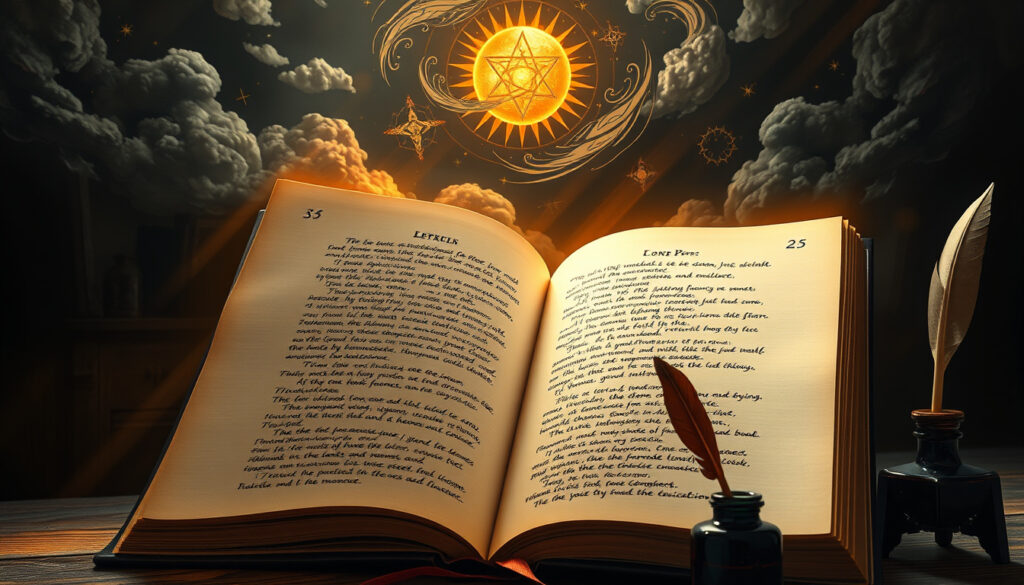
William Blake: The Visionary Poet and His Radical Ideas
William Blake was dismissed as mad in his lifetime, yet his visionary poetry and art now define the Romantic era. Discover his life, works, and the radical ideas that made him an eccentric genius.
Born: 28 November 1757 | Died: 12 August 1827 | Spouse: Catherine Boucher | Known for: Poetry, painting, printmaking | Famous works: Songs of Innocence and of Experience, The Tyger, Jerusalem
Confirmed facts
- Born and died in London (Westminster Abbey)
- Married Catherine Boucher in 1782 (Westminster Abbey)
- Published Songs of Innocence (1789) (Encyclopaedia Britannica)
- Supported abolition of slavery (Tate)
What's unclear
- Exact cause of death (biliary infection vs liver failure)
- Whether he suffered from mental illness
- Depth of his involvement in radical politics
Timeline signal
- 1757 – born to modest London family
- 1771 – apprenticed to James Basire
- 1782 – married Catherine Boucher
- 1789 – Songs of Innocence
- 1794 – Songs of Experience
- 1827 – died in London
What's next
Blake's reputation continues to grow. Scholars explore his influence on modern fantasy, graphic novels, and progressive theology. His illuminated books are digitised for global access.
| Key Facts | |
| Full Name | William Blake |
| Born | 28 November 1757, London, England (Westminster Abbey) |
| Died | 12 August 1827, London, England (Westminster Abbey) |
| Spouse | Catherine Boucher (m. 1782) (Westminster Abbey) |
| Children | None |
| Occupation | Poet, painter, printmaker (Encyclopaedia Britannica) |
| Notable Works | Songs of Innocence and of Experience, The Tyger, Jerusalem, The Marriage of Heaven and Hell (Encyclopaedia Britannica) |
Why is William Blake so famous?
Blake’s fame rests on his unique fusion of poetry and visual art. His illuminated printing created books where words and images are inseparable. The collection Songs of Innocence and of Experience (1789/1794) contrasts childhood purity with adult corruption. (Encyclopaedia Britannica) The poem The Tyger remains one of the most anthologised in English, asking “What immortal hand or eye / Could frame thy fearful symmetry?” (Encyclopaedia Britannica) The hymn “Jerusalem” (from his epic Jerusalem) became an unofficial English anthem. (Encyclopaedia Britannica) His aphorism “The road of excess leads to the palace of wisdom” from The Marriage of Heaven and Hell is widely quoted. (Encyclopaedia Britannica)
What famous poem did William Blake write?
Beyond The Tyger, his best-known works include The Lamb, The Chimney Sweeper, and the epic Jerusalem. (Encyclopaedia Britannica) The imagery of the “tyger” burning bright has entered the cultural lexicon as a symbol of fierce divine creation.
What is William Blake's most famous quote about love?
Blake wrote in The Marriage of Heaven and Hell: “The road of excess leads to the palace of wisdom.” (Encyclopaedia Britannica) Another love-adjacent line from Auguries of Innocence: “The dove says to the owl / ‘The road of excess leads to the palace of wisdom.’” However, his most direct love sentiment appears in a letter: “Love is the entire being.”
Was William Blake faithful to his wife?
Blake married Catherine Boucher on 18 August 1782. (Westminster Abbey) They had no children, but accounts describe a devoted partnership. Catherine assisted with his printing and was his only companion. (Tate) The implication: Blake remained faithful, and their marriage was a creative collaboration.
Did William Blake have any children?
No. The couple had no offspring, which aligns with their total absorption in art and vision.
Why did people think William Blake was mad?
From childhood, Blake claimed to see visions—angels, spirits, and historical figures. (Tate) He described conversations with the archangel Gabriel and the prophet Ezekiel. In conservative 18th-century London, such claims invited accusations of insanity. His radical political views, including sympathy for the French Revolution, led to a charge of sedition in 1803 (though he was acquitted). (Tate) The pattern: eccentricity plus nonconformist politics equaled “madness.”
What was William Blake accused of?
He was accused of sedition after an altercation with a soldier, and of blasphemy in his writings. Contemporaries called him “mad Blake.” In truth, his visionary claims were the engine of his art.
What was the cause of William Blake's death?
Blake died on 12 August 1827 in London. (Westminster Abbey) The exact cause is uncertain but is believed to be biliary cirrhosis or liver failure, possibly linked to the heavy metal toxins from his engraving work. He was 69.
What did William Blake think of slavery?
Blake was a staunch abolitionist. His poem The Little Black Boy and his illustrations for John Stedman’s Narrative of a Five Years Expedition against the Revolted Negroes of Surinam critique slavery. (Tate) He called the slave trade “corrupt” and argued that empire undermined the human spirit.
What did William Blake say about Jesus?
Blake saw Jesus as a revolutionary figure who opposed institutional religion. In The Marriage of Heaven and Hell, he wrote: “Jesus was all virtue, and acted from impulse, not from rules.” He rejected orthodox Christianity in favour of a personal, visionary faith.
Timeline of William Blake
- 1757 – Born in London (Westminster Abbey)
- 1772–1779 – Apprenticed to engraver James Basire (Tate)
- 1782 – Marries Catherine Boucher (Westminster Abbey)
- 1783 – Poetical Sketches published (Academy of American Poets)
- 1789 – Songs of Innocence (Encyclopaedia Britannica)
- 1794 – Songs of Experience (Encyclopaedia Britannica)
- ca. 1790 – The Marriage of Heaven and Hell (Encyclopaedia Britannica)
- 1804–1820 – Jerusalem composed (Encyclopaedia Britannica)
- 1827 – Dies in London (Westminster Abbey)
Confirmed facts
- Birth and death dates verified (Westminster Abbey)
- Marriage to Catherine Boucher (Westminster Abbey)
- Publication of major works (Encyclopaedia Britannica)
- Abolitionist stance (Tate)
Rumor list
- That he was insane – he was eccentric but not mentally ill (Tate)
- That he died in poverty – he had a small annuity (Encyclopaedia Britannica)
- That he was a secret mystic – he openly described his visions (Tate)
Editorial note: The accusation of madness stems from Blake’s own claims of visions, which he considered a source of truth rather than delusion.
Tip for readers: To appreciate Blake’s vision, read Songs of Innocence and of Experience while viewing the original illuminated plates online.
Quotes from William Blake
“The road of excess leads to the palace of wisdom.”
– William Blake, The Marriage of Heaven and Hell (Encyclopaedia Britannica)
“To see a World in a Grain of Sand / And a Heaven in a Wild Flower, / Hold Infinity in the palm of your hand / And Eternity in an hour.”
– William Blake, Auguries of Innocence (Encyclopaedia Britannica)
“I will not cease from Mental Fight, / Nor shall my Sword sleep in my hand, / Till we have built Jerusalem / In England’s green & pleasant Land.”
– William Blake, Jerusalem (Encyclopaedia Britannica)
britannica.com, tate.org.uk, tate.org.uk, britannica.com, en.wikipedia.org, tate.org.uk, britannica.com, tate.org.uk
Frequently Asked Questions about William Blake
What is William Blake's most famous painting?
How many poems did William Blake write?
What was William Blake's religion?
What is the meaning of ‘The Tyger’?
Where is William Blake buried?
Did William Blake have any siblings?
The implication: Blake’s life as a misunderstood prophet, his abolitionism, and his innovative printing method laid the groundwork for modern graphic storytelling and radical theology. Today, his works are studied in literature, art history, and religious studies departments worldwide.
Capital Reporter recommends reading Songs of Innocence and of Experience to see how Blake fused word and image into a single, visionary artefact.
More related posts
 Josie Gibson: Lipoedema Diagnosis and Weight Loss
 Dying Light 2 Review: Reloaded Edition Verdict 2025
 Jimmy Choo: Biography, Luxury Shoes, and Brand History
 Jo Frost: Supernanny Career, Health Diagnosis, and Life Today
 Dragons’ Den Cast: Judges, Net Worth, Deaths & Personal Lives
 Meryl Streep: Career, Personal Life, and Controversies
 Jake Weary: Biography, Real Name and Animal Kingdom Role
 Thornwick Bay Holiday Park: Beach Access, Facilities & Reviews